Revenge4 min read
The Cleaning Lady at the Board Meeting
When arrogant managing director Brandon forces 64-year-old night cleaner Eleanor to kneel and wipe his shoes after a coffee spill, he doesn't know she is married to the company's founder. At the 2:00 PM shareholder meeting, Eleanor returns to vote her controlling trust shares.
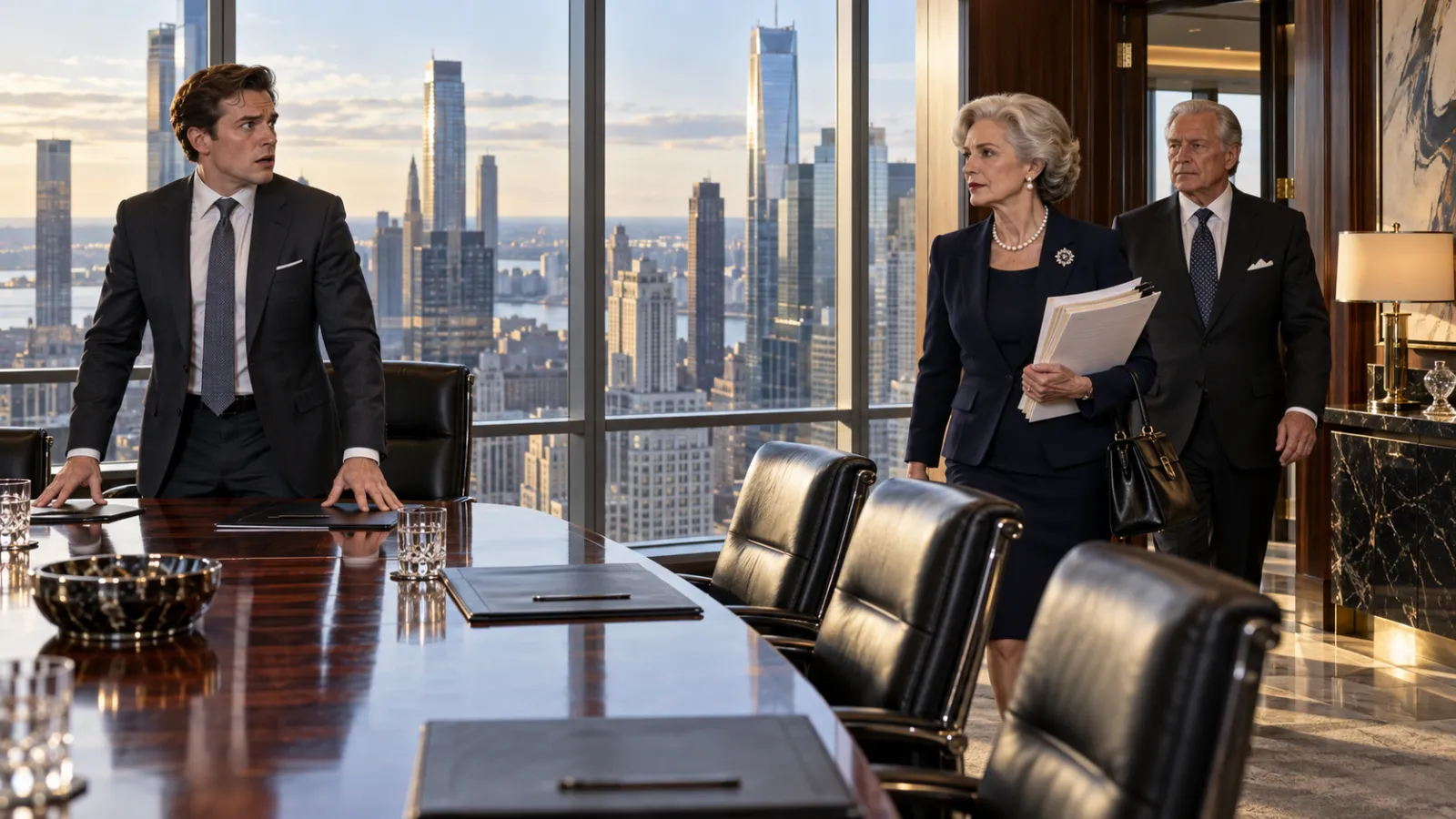
Chapter 1: Buffing the Mahogany at Dawn
When our arrogant interim managing director spilled coffee on his designer loafers, he forced me to kneel and wipe them with my bare hands before kicking over my wash bucket. But at two o'clock during the annual shareholder vote, I walked into his boardroom with fifty-two percent of the company.
At five in the morning, the fortieth floor of the Sterling Dynamics tower was as silent as a cathedral. The only sounds were the hum of the ventilation shafts and the rhythmic stroke of my flannel cloth moving across Honduran mahogany. The air smelled of beeswax, lemon rind, and cedar shavings. Down below, Cleveland was still asleep under an October drizzle, the streetlights reflecting off the black ribbon of the Cuyahoga River like scattered copper pennies.
I was sixty-four years old, and my knees occasionally complained when the rain rolled in from Lake Erie, yet I loved this quiet hour before dawn. For twelve years, I had held the custodial badge for the executive floor. The human resources department listed me as Eleanor Cole, using my mother's maiden name on the payroll forms. Nobody questioned why a woman with silver hair and gentle manners spent her mornings scrubbing glass partitions and emptying wastebaskets. They assumed I was an ordinary pensioner working to cover property taxes and dental copays.
In truth, I did not need the eleven dollars and seventy-five cents an hour. Forty-two years ago, my husband Donald and I had founded Sterling Dynamics in a freezing brick machine shop on the industrial flats. Donald stood over a manual lathe turning steel shafts until his knuckles bled, while I balanced the invoices on an overturned grease drum and packed bearings into cardboard crates. Over four decades, that little machine shop grew into a global corporation producing robotic actuators and automated assembly systems.
Five years ago, Donald suffered a mild stroke during a supplier negotiation. The doctor told him to step away from seventy-hour workweeks if he wanted to see his seventies. We moved out to our quiet brick home on Shaker Boulevard, where Donald spent his mornings pruning heritage apple trees and restoring vintage tractors. But while Donald embraced the slow pace of the country, I refused to sit in an empty living room drinking tea from bone china.
I had spent my entire youth around grease and cold rolled steel. Physical labor kept my mind alert and my joints moving, but more importantly, it kept me tethered to the real heartbeat of the enterprise. Up on the executive floor, men in three-thousand-dollar suits made decisions about layoffs and benefit cuts with casual strokes of their fountain pens. Down on the shop floor, families depended on those paychecks to put groceries on the table. Cleaning the building allowed me to watch the culture of our company without the flattering distortions that always surround owners.
The boardroom table was my favorite piece of furniture in the entire skyscraper. Donald had milled the timber himself in 1991 from old-growth mahogany beams salvaged from a demolished rail warehouse. It measured thirty feet long and weighed nearly eight hundred pounds. Its surface held a rich, honeyed grain that deepened every time I worked warm linseed oil into the wood. Every scar and ring mark on that timber represented an honest contract or a breakthrough patent.
Everything began to deteriorate six months ago when Brandon Sterling was appointed interim managing director. Brandon was thirty-five, the distant nephew of Donald's late engineering partner, Richard. He possessed sharp cheekbones, slicked-back dark hair, and an endless appetite for personal acclaim. He had arrived from a private equity firm in Manhattan with ambitious promises to streamline operations.
In practice, streamlining meant cancelling the factory apprentice program and cutting the custodial night differential by twenty percent. Brandon treated everyone beneath the title of vice president as disposable machinery. He never said good morning to the security guards. He dropped crumpled protein bar wrappers on the corridor carpet five feet from the trash bin. Whenever he passed me in the hallway, his gaze drifted right through my gray smock, as if I were a coat rack or a potted ficus plant.
Today was the second Friday of October, the date of the annual shareholder confirmation meeting. At two in the afternoon, the board of directors would vote on whether to make Brandon's executive position permanent for the next ten years. Brandon had spent weeks lobbying institutional investors, promising aggressive stock buybacks and ruthless margin expansions. If the vote passed, he would also receive twenty million dollars in unvested equity grants and a private jet allowance.
I folded my flannel rag into a neat square and tucked the tin of cedar paste wax into my gray apron pocket. The eastern horizon was beginning to glow with pale gold light, illuminating the distant ore freighters navigating the harbor. In less than two hours, this quiet room would be swarming with lawyers, investment bankers, and executive assistants carrying leather folders.
I picked up my mop and moved toward the panoramic glass windows. I wanted the glass completely spotless so the morning sun would flood the table Donald had built with his own hands. As I worked, I heard the faint ding of the executive elevator chiming down the hallway, far earlier than usual. The morning peace was about to break.
End of chapter 1