Family4 min read
The Grocery Receipt Under Mom's Mattress
The day after Mom's funeral, my sister-in-law accused me of stealing twenty thousand dollars from Mom's savings. But under Mom's mattress, we found the truth.
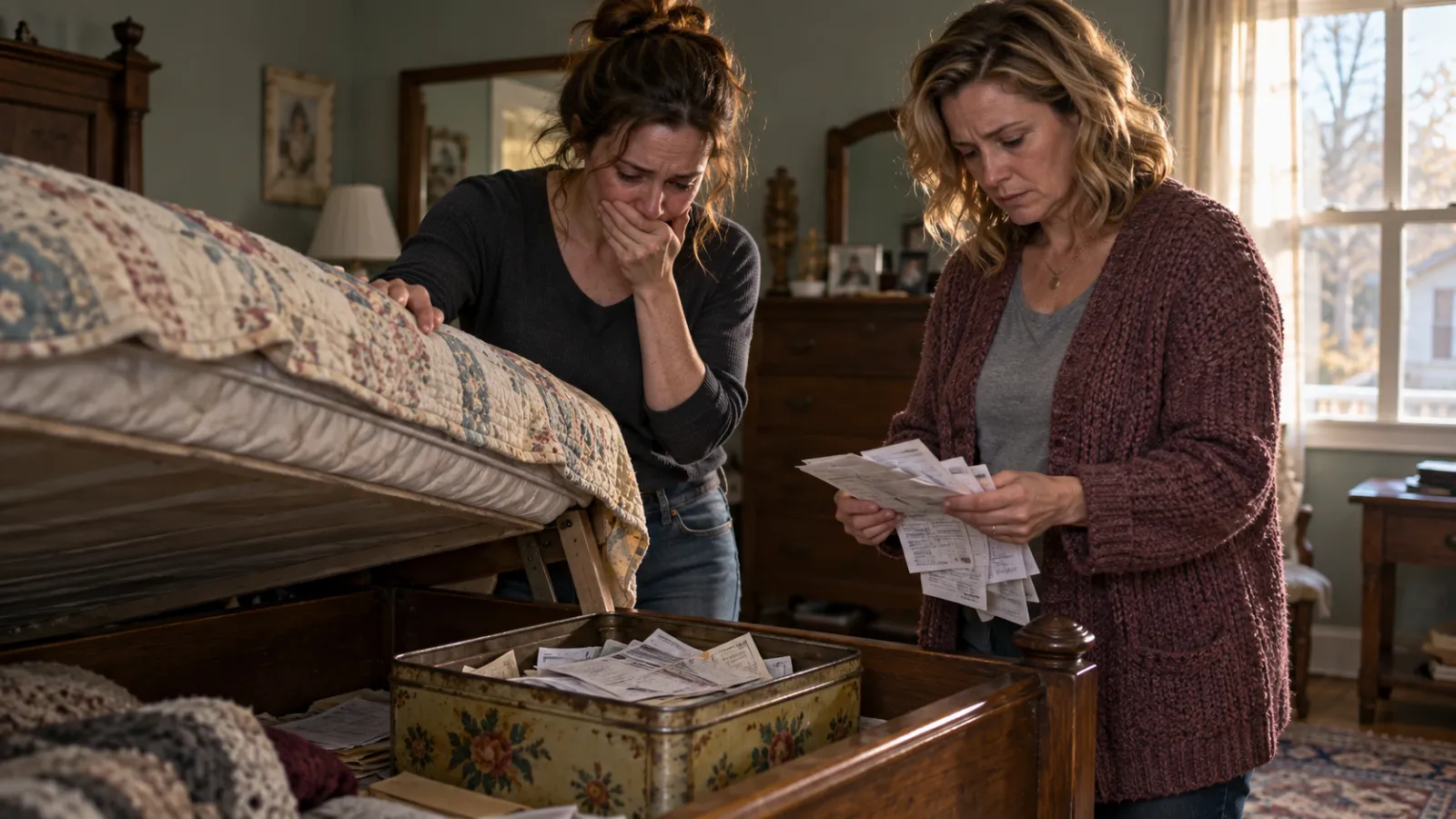
Chapter 1: Twenty-Two Thousand Dollars Short
The day after Mom's funeral, my sister-in-law threw a bank statement across the dining table and accused me of stealing twenty thousand dollars. She swore Mom had kept twenty-two thousand in reserve, but the balance showed fourteen hundred.
The paper slid between our coffee mugs, stopping against the sugar bowl. It was an official statement from First Federal Lakewood, stamped the third of October. In bold black ink, the checking balance read exactly $1,418.62.
"Take a good look, Clara," Brenda said. Her winter coat was still buttoned to her chin, her wool scarf trailing across the back of the oak chair. "Look at the numbers and tell me where the rest went."
My brother Greg stood behind her near the kitchen doorway. He had his hands jammed into his canvas work jacket, his shoulders hunched as if he were trying to pull his neck inside his collar. He looked at the floorboards, where Mom's wool runner had worn thin near the threshold.
"Brenda, stop," Greg muttered. "Mom was buried yesterday afternoon. Clara sat by the hospital bed for three weeks straight."
"I am not talking about three weeks, Greg," Brenda snapped without turning around. She kept her brown eyes locked on mine. "I am talking about twenty-four months. Two full years of Clara living in this house rent-free with Mom's signature card in her purse."
My hands felt cold around the warm ceramic mug. I was thirty-six years old, a triage nurse at MetroHealth who had spent a decade handling screaming patients and gunshot victims in trauma bays. Yet sitting in my mother's dining room, surrounded by the faint smell of funeral lilies and lemon polish, my voice sounded small.
"Mom's pension was eleven hundred dollars a month," I said quietly. "Her Medicare Advantage plan did not cover half of her maintenance inhalers or the home oxygen tanks. I bought the groceries. I paid the heating oil delivery in January out of my own checking account."
"Do not play the martyr with me," Brenda said. Her voice rose half an octave, cutting through the quiet morning. "We all know what happened four years ago. Your father's truck sold for fourteen thousand cash to the paving contractor down the road. Mom rolled the eight-thousand-dollar certificate of deposit from KeyBank into this exact account. That was twenty-two thousand dollars sitting untouched."
She tapped her acrylic nail against the paper. The sharp plastic click sounded like dry twigs snapping underfoot.
"Eleanor was seventy-four years old," Brenda continued, leaning forward. "She washed plastic bread bags and dried them on the dish rack. She cut paper towels in half with kitchen shears to make them last. She did not spend twenty thousand dollars on groceries and electric bills, Clara. You know she didn't."
I stared at the statement. The truth was that I had wondered about the money myself, long before Mom passed away. When I moved into the Avalon Road house two years ago to help her manage her congestive heart failure, I had taken over writing the utility checks. The savings account had already been sitting under two thousand dollars then. Whenever I asked Mom if she had another account or needed help with property taxes, she would wave her thin, blue-veined hand and change the subject to her garden.
"Mom handled her own savings," I said, looking Brenda in the eye. "She went to the bank by herself on the bus until her ankles swelled too badly last spring. I never touched a dime that wasn't for her prescriptions or her groceries. I have every single store receipt in the pantry drawer."
"Store receipts," Brenda scoffed. She unzipped her coat with a harsh yank of the metal teeth. "Milk and tea bags do not add up to twenty thousand dollars. Either you skimmed it while you played devoted daughter, or Mom took the cash out herself and stashed it somewhere in this drafty museum."
"Brenda, that's enough," Greg said, stepping forward. His voice carried the rough, rasping tone of a carpenter who spent fifty hours a week inhaling sawdust and drywall dust. "Clara didn't steal anything. You know my sister."
"I know we have twelve thousand dollars left on our second mortgage, Greg!" Brenda turned on him, her cheeks flushing red. Her eyes were bright with an anger that had clearly been festering for months. "I know our contractor insurance is due next week. If your mother had twenty-two thousand dollars, that money belongs to the estate. It belongs to her children, not to Clara's savings or some hidden floorboard."
She turned back to me, her jaw set into a rigid line.
"Old people from Mom's generation don't trust banks," Brenda insisted. "My grandmother kept nine thousand dollars sewn into the lining of an old winter coat. Eleanor grew up hearing stories from the Depression. If she withdrew that money, it is in this house."
"There is no hidden cash here, Brenda," I said, standing up. "I lived here for two years. I dusted every baseboard and cleaned out every closet when we set up the hospital bed."
"Then you won't mind if we look," Brenda said. She pushed the bank statement into her handbag and zipped it shut. "We start with the sideboard downstairs. And then we go through her bedroom."
End of chapter 1