Relationship5 min read
My Husband's Second Phone Had One Number In It
I found a second phone hidden in my husband's toolbox and braced myself for the other woman's name. The only number saved in it was mine, and the only thing on it was thirty-one voice memos he never meant me to hear yet.
Chapter 1: The Toolbox
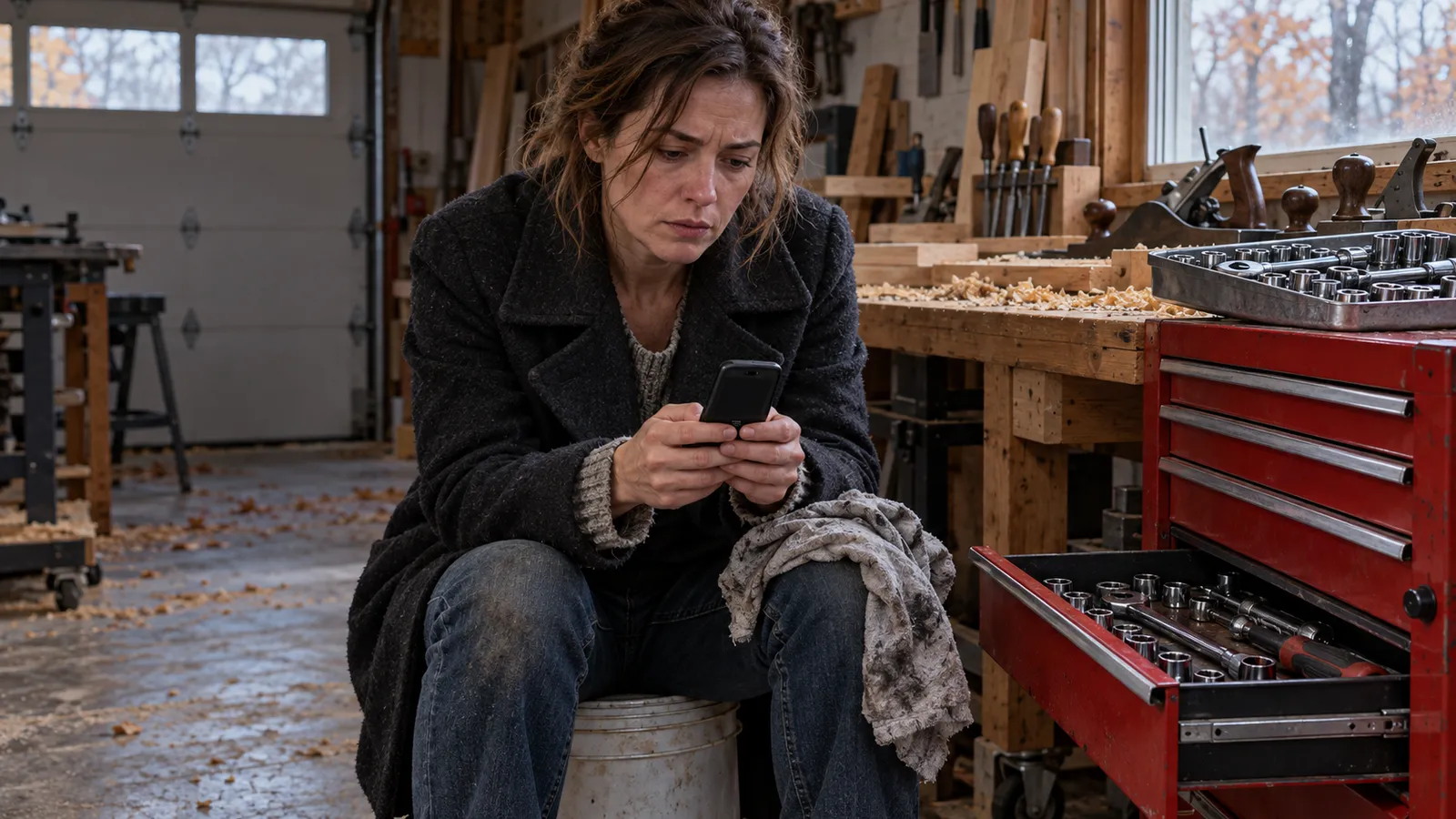
The second phone was at the bottom of my husband's toolbox, under the socket tray, wrapped in a shop rag that still smelled like varnish. I had been waiting seven months to find a thing like that. It had one number saved in it, and the number was mine.
That part came later. First there was the rag, and my hand going still.
I had come home early on a Tuesday because the clinic shut down scheduling at two for a system upgrade and sent half of us away. Isaac's truck was gone. The garage door was up and the shop was cold, the way it gets when the heater has been off since morning, and his bench was clean, which told me he had finished something.
I stood there with my coat still on.
In my bag was a spiral notebook, and in the notebook was a list. I started it in April. Dates in the left margin, a few words in the right.
April 9, home 11:40, said Tobias needed help with a table saw. May 2, took the call in the driveway, 14 minutes. June 18, didn't eat.
I am a surgical scheduling coordinator. For nineteen years I have put other people's lives into narrow boxes on a screen. When my own stopped making sense, I did the only thing I know how to do with a mess. I gave it columns.
Fourteen pounds since spring. He stopped drinking beer in March, all at once, no announcement. He paid the truck loan off eleven months early and told me he wanted it gone. He took every phone call standing in the driveway with his back to the kitchen window, even in the rain, even when it was nine degrees in February and I watched him stamp his feet on the concrete and talk to someone for eleven minutes.
And in the spring he started locking the toolbox.
It is a red steel chest, five drawers, on casters, and it had never had anything in it worth locking. Chisels. A set of Forstner bits he bought with his first real check. For sixteen years that lid sat open half the time with a coffee cup on it.
Then one day it was locked, and I made a note of the date, and I did not ask him about it, because by then I had decided I was not going to be the woman who asks.
I knew where the key was. He kept it on a bent nail behind the bench vise, which is not a hiding place, it is a habit. That was what made me stand there so long with my coat on. He had not hidden the key. He had only closed the box, the way you close a door you are standing behind.
Edie came through the side door in her parka with her hair wet, hauling her swim bag.
"Mom. Why are you in the garage."
"Looking for the staple gun."
"It's on the washer. It's been on the washer for like a month." She stopped in the doorway. She does this thing when she is uneasy where she says the house out loud to herself, a running inventory, as if naming things keeps them where they are. "Okay, so, you're home early and Dad's not here. Is something happening?"
"Nothing's happening."
"That's what you said in August."
She has his face and my timing. She waited three seconds longer than a kid should have to wait, and then she said Marissa's mom was driving and she would be back by six, and the door banged, and the car pulled out, and the shop went quiet again.
I took the key off the nail.
The top drawer was pencils, a tape measure, a utility knife, receipts folded into a cigar box. And a prescription bottle, white, the label turned face down against the felt, which I noticed the way you notice a sound in another room. I did not pick it up. I want to be honest about that, because of what came after. It was right there under my hand and I left it alone, because I had already decided what I was looking for, and a pill bottle was not it.
Second drawer, bits. Third, planes and a block of paraffin. Fourth, sandpaper by grit, each stack squared off, because he is like that.
The bottom drawer is deep. Clamps, a coil of extension cord, the socket tray he never uses anymore since he bought the impact set.
Under the socket tray, a shop rag, folded into a square instead of balled up.
I knew before I opened it. There is a particular weight to a phone wrapped in cloth, and my hands knew it, and my chest knew it, and I sat down on the overturned bucket he uses for a stool because my knees quit.
It was black, cheap, a brand I did not recognize, the kind of thing you buy off a rack at a pharmacy and pay for with cash. The screen was dusty. I pressed the button on the side and it lit up at nine percent, and there was no photograph behind the lock screen, just the factory wallpaper, blue and gray, and a keypad asking for four digits.
Seven months of notes in a spiral notebook, and here was the whole thing in my palm, weighing about as much as a deck of cards.
I want to tell you I felt something complicated. I did not. I felt relief, which I am ashamed of now, a flat clean relief like a fever breaking, because for seven months I had been the only person in my house who thought something was wrong, and the phone in my hand said I was not crazy.
I put the rag in my coat pocket. I shut the drawers. I hung the key back on its bent nail, because I wanted him to walk into a room that looked exactly the way he left it.
Then I went inside and sat at the kitchen table with the phone face up on Edie's old placemat and looked at the four empty boxes on the screen.
End of chapter 1