Revenge4 min read
The Waitress Fired Over a Chipped Plate
When lead server Maya is publicly fired for defending an elderly diner who accidentally chipped a bread plate at luxury restaurant Lumina, the humble guest returns the next morning as the plaza's billionaire landlord, evicting the abusive manager and handing Maya the keys.
Chapter 1: Friday Rush at Lumina
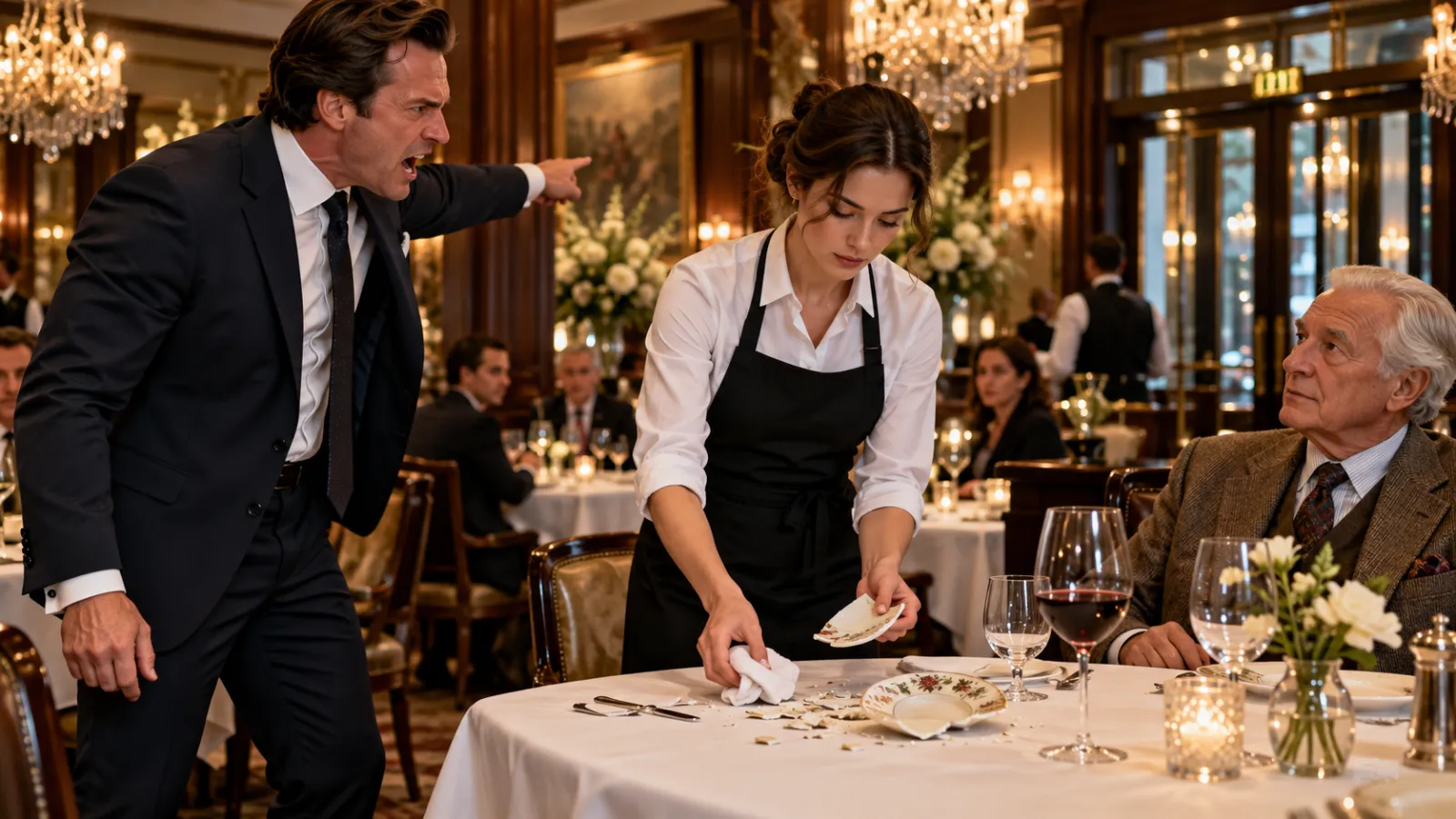
When an elderly man in a worn tweed jacket accidentally chipped a bread plate at our luxury restaurant, our manager screamed at him and fired me on the spot for defending him. But twelve hours later, that same quiet customer returned with the deed to the entire plaza.
That Friday evening, Lumina was operating at full capacity. The dining room gleamed under two dozen brass chandeliers, their golden light bouncing off Italian marble floors and polished silverware. Wealthy patrons filled the leather booths, clinking crystal flutes of vintage champagne and dissecting corporate mergers. At twenty-nine, I had worked as a lead server at Lumina for four years. Every dollar I earned paid for my daughter Chloe's preschool tuition, our modest two-bedroom apartment, and her pediatric asthma inhalers.
The pace was relentless from six o'clock onward. I carried heavy oval trays loaded with ninety-dollar prime ribeyes, wild mushroom risottos, and decanters of aged Bordeaux. My feet burned inside my nonslip black shoes, but I kept my posture straight and my smile warm. In fine dining, any sign of strain invited trouble, especially with Preston Vance watching from the host podium.
Preston was thirty-eight, dressed in a custom charcoal suit with gold cuff links and slicked-back dark hair. He was a minority investor who owned two percent of the restaurant, yet he spoke as though he had carved the building from stone with his bare hands. He treated the floor staff like disposable appliances. Beside him stood Cynthia, the head floor supervisor, whose primary duty seemed to be noting down who paused for a sip of water in the server station.
Around eight o'clock, Cynthia walked over to my station and tapped my shoulder with her silver ballpoint pen. She gestured toward Table Nine, an alcove booth nestled near the velvet rear draperies.
"Maya, you have a solo walk-in at nine," she said, curling her lip with undisguised annoyance. "No reservation. The host seated him because the bar stools were packed. Get his order fast and turn the table before the theater crowd arrives."
I walked over to Table Nine with a leather-bound menu and an ice-water carafe. The guest sitting there did not match Lumina's customary demographic. He was an elderly man, well into his seventies, with thin silver hair neatly combed back and kind, wrinkled blue eyes. He wore an old gray tweed jacket with frayed cuffs, a faded wool sweater, and scuffed brown brogues. While the men at adjacent tables displayed six-figure watches, his only adornment was an ancient wind-up wristwatch on a cracked leather strap.
"Good evening, sir," I said, offering him a gentle smile as I poured water into his crystal goblet. "Welcome to Lumina. My name is Maya, and I will be taking care of you tonight."
The man looked up, his expression relaxing immediately. His voice was soft, carrying a gentle warmth that stood in stark contrast to the clatter of the busy dining room. "Thank you, Maya, that is very kind of you. The wind outside is quite biting tonight, and this room feels wonderfully welcoming."
I brought him our complimentary basket of warm rosemary focaccia and whipped sea-salt butter. While other tables routinely demanded expensive imported appetizers, he took a small piece of bread and praised the fragrant rosemary aroma. When I recited the evening specials, he listened with genuine attention.
"The specials sound remarkable," he said with an appreciative nod. "However, my appetite is modest this evening, so could I simply trouble you for a bowl of beef consommé and a small side salad?"
"Of course, sir," I answered without hesitation. "I will have the kitchen prepare that right away."
When I entered the ticket at the terminal, Cynthia appeared behind me. She peered over my shoulder at the digital screen and scoffed loudly.
"A bowl of broth and greens on a Friday night in prime seating?" she whispered harshly. "That table is generating twelve dollars while our average cover is one hundred and fifty. Drop his check the second he puts down his spoon."
"He is a paying guest, Cynthia," I replied quietly, keeping my tone respectful. "Everyone deserves good service, regardless of what they order."
She rolled her eyes and marched off toward Preston's station. I collected the hot bowl of consommé from the kitchen pass and carried it out to Table Nine. Walter, as I would soon discover his name to be, thanked me with a polite nod. He ate slowly, savoring the warm broth and observing the opulent surroundings with calm curiosity. He did not ask for special favors or complain about the noise.
Watching him enjoy his meal reminded me of my late grandfather, who had worked forty years as a railway mechanic and saved for months just to take my grandmother out for Sunday lunch. A restaurant existed to provide comfort, not to measure human worth by the balance of a bank account. I refilled his water glass, cleared his salad plate, and placed a fresh basket of warm bread on the table.
He smiled up at me, his eyes crinkling at the corners. "You take great pride in your work, young lady, and that is an admirable quality."
"Thank you, sir," I murmured, feeling a quiet sense of peace amidst the evening rush. "Hospitality should always feel like home."
I excused myself to attend to Table Four, who had signaled for another bottle of wine. Everything seemed calm, the dining room humming with laughter and soft jazz. I could not anticipate that ten minutes later, a tiny slip of porcelain would tear my entire livelihood apart.
End of chapter 1