Family4 min read
The Missing Name on the Family Monument
At the unveiling of our family granite monument, Uncle Douglas omits Aunt Marianne's name, claiming she disgraced the clan. Samuel digs into county records and discovers a 1982 deed proving Marianne saved the farm from foreclosure and Douglas owes her estate a $350,000 promissory note.
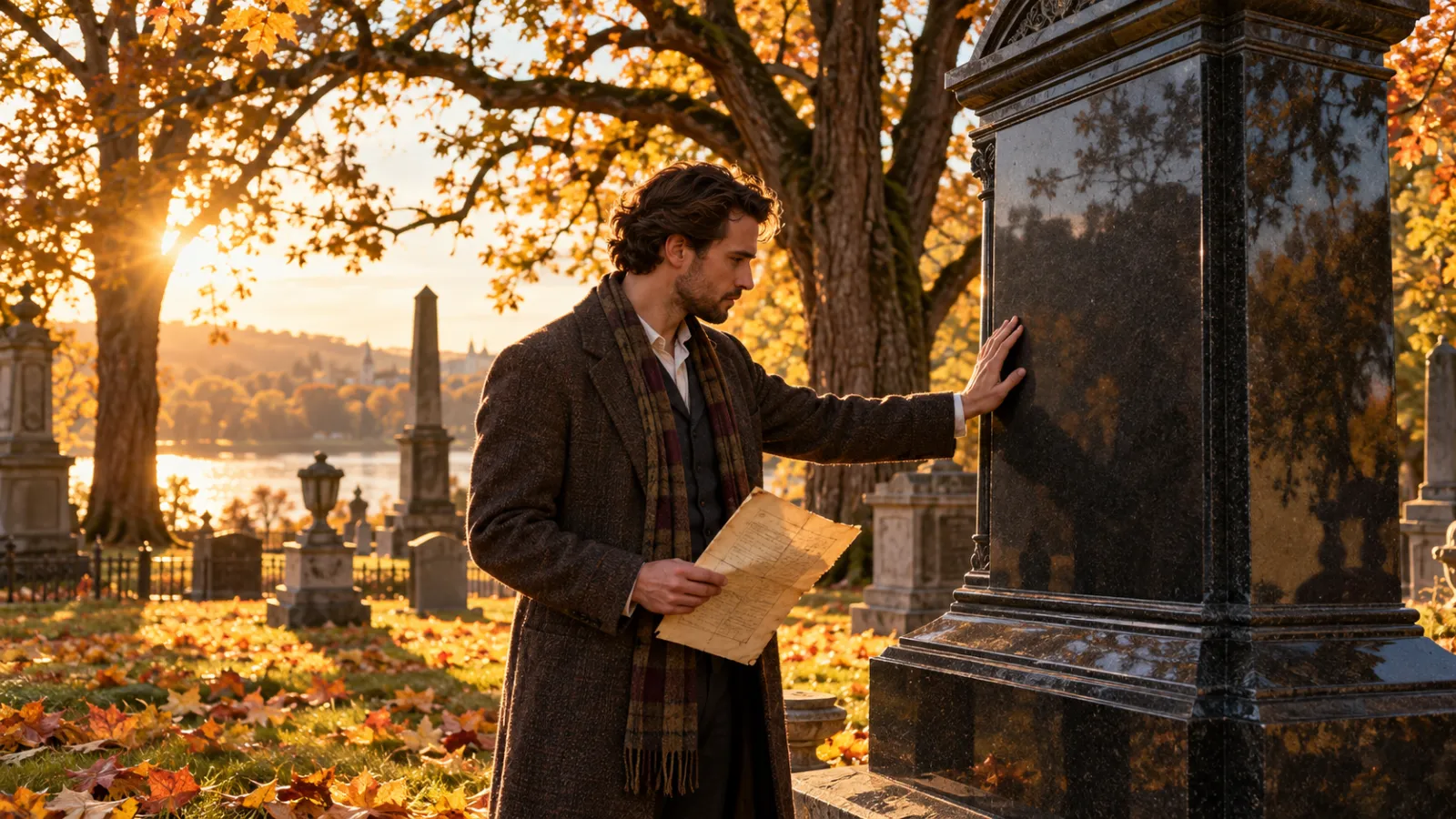
Chapter 2: The Erased Name of Aunt Marianne
The drive from Oakridge Cemetery to Staunton took twenty minutes along Route 250. The sun dipped behind the Blue Ridge Mountains, painting the October sky in shades of bruised plum and copper. I pulled into the narrow gravel driveway of the small brick bungalow on Market Street where Aunt Marianne had lived for more than fifty years.
Since her passing six months ago, I had kept the house clean, visiting every weekend to water her geraniums and air out the rooms. The house was modest, with white painted trim, a screened porch, and a garden filled with late chrysanthemums. Stepping through the front door always brought back the familiar scent of beeswax polish, dried lavender, and peppermint tea.
I hung my jacket on the brass hall tree and walked into the kitchen to put the kettle on the stove. Just as the burner flared to life, headlights swept across the lace curtains. A silver sedan pulled in behind my truck.
A car door slammed shut, followed by hurried footsteps on the porch. I opened the door to find Claire standing under the yellow porch light. Her eyes were red-rimmed, and she wrapped her wool cardigan tightly around herself against the evening chill.
"Can I come in, Samuel?" she asked softly.
"Of course you can," I replied, stepping aside to let her into the warm hallway.
Claire sat at the round oak table where Marianne had helped me with middle school algebra twenty years ago. She rested her forehead against her hands, letting out a long, weary sigh.
"I am so ashamed of him," Claire said, her voice shaking with quiet fury. "Standing on that platform, lecturing sixty relatives about family pride, and then treating Aunt Marianne like a criminal. He knew exactly what he was doing when he left her name off that stone."
I set two mugs of peppermint tea on the table and sat opposite her. "Douglas said she never put a dime into the farm. Has he always said that?"
Claire shook her head bitterly. "For fifteen years, that has been his gospel. Whenever anyone brought up Aunt Marianne, my father claimed she abandoned the farm during hard times to live comfortably in town. But I am an accountant, Samuel. I audit business ledgers for a living. My father is an expert at rewriting balance sheets to make himself look like a martyr."
She looked up at me, her brown eyes bright with resolve. "Last month, when he was finalizing payments for the monument, I saw an old ledger in his office safe. The entry was filed under 1982, labeled with Aunt Marianne's initials. When I asked him about it, he slammed the ledger shut and told me to mind my business. There is something he is hiding."
I walked down the short hallway into Marianne's bedroom. In the corner sat her antique cedar hope chest, its brass corners polished smooth by decades of care. I lifted the heavy cedar lid, releasing the warm aroma of dry wood. Beneath a stack of hand-quilted blankets lay a dark green tin lockbox.
I carried the box into the kitchen and set it on the oak table. From my pocket, I pulled the brass key that Marianne had kept on her key ring until her final days in hospice.
The lock turned with a crisp click. Inside were Marianne's nursing school graduation diploma from 1962, her gold forty-year service pin from the pediatric ward, and a bundle of letters tied with faded blue ribbon. Beneath them lay a small pocket diary bound in black leather, with the year 1982 stamped on the spine in gold numerals.
"She kept a daily journal," I said, opening the yellowed pages carefully.
Claire leaned forward as I turned the pages. Marianne's penmanship was neat and disciplined, the handwriting of an experienced nurse who had charted vital signs for thousands of infants. Most entries recorded quiet routines: morning hospital shifts, church choir practice, Sunday dinners.
Then I reached the entries for August 1982. The tone of the handwriting changed sharply, the pen strokes heavier and more hurried.
"August 12, 1982," I read aloud. "Douglas came to the house at midnight, nearly in tears. The Federal Land Bank issued a final foreclosure decree on the bottomland pastures. Interest rates hit eighteen percent and the drought wiped out the corn crop. The auction is set for September unless sixty-eight thousand dollars in cash is delivered to the sheriff."
Claire let out a sharp gasp. "Sixty-eight thousand dollars in 1982 was a fortune. That would equal over two hundred thousand dollars today."
I turned the page to the next entry, dated August 17, 1982.
"Went to the bank this morning," Marianne had written. "Cashed out my municipal bonds and withdrew my entire hospital pension reserve. Met Douglas and County Clerk Arthur Henderson at the Augusta County Courthouse. Signed the transfer paperwork and paid the bank in full. Douglas wept and swore on our mother's Bible that he would repay every cent once the harvest recovered. He signed a registered promissory note in front of the clerk so the family farm would remain whole."
The kitchen fell completely silent. The wall clock ticked steadily, measuring the weight of the revelation.
"She gave up her entire life savings," Claire whispered, her voice cracking with emotion. "She spent thirty years working night shifts in the nursery, and she handed over her retirement so my father would not lose the land."
"And Douglas never recorded that debt in his family history," I said, my fingers tracing the aged ink on the page. "Instead, he erased her name from the monument."
"Can you find the original courthouse records?" Claire asked, looking directly into my eyes.
"I teach county history, Claire," I said, closing the leather journal. "I have spent ten years working in the archives of the circuit court. First thing Monday morning, I will find every piece of paper Douglas thought he could bury."
End of chapter 2