Family4 min read
The Price of Mom’s Handwritten Recipe
At the estate division in Shaker Heights, my siblings claimed our late mother's suburban townhouse and luxury car, shoving her grease-stained recipe notebook into my chest as my petty share. But glued between two yellowed pages lay a secret partnership charter that changed everything.
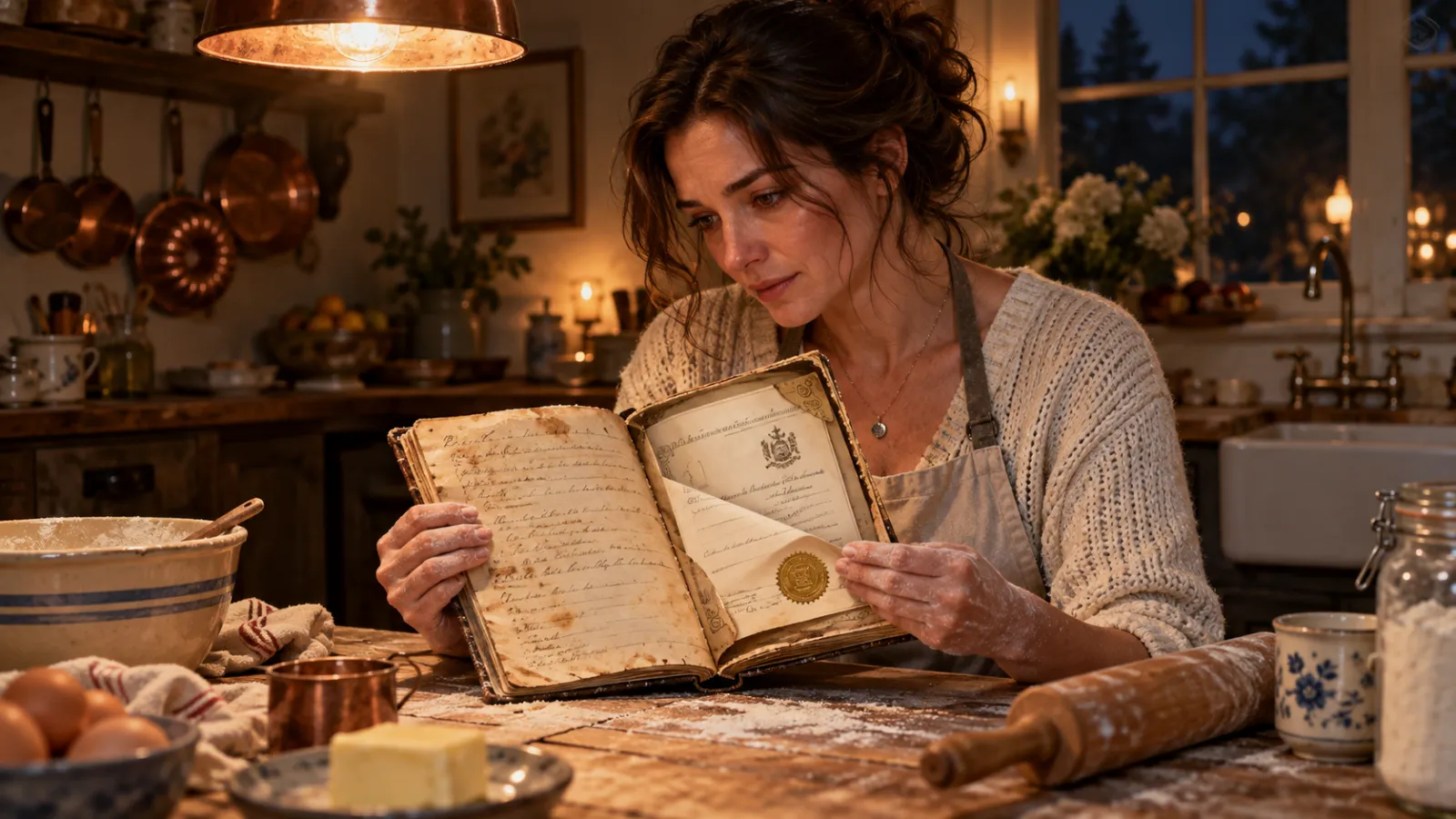
Chapter 2: Flour Dust and Grease Stains
The radiator in the corner of my fourth-floor Lakewood apartment clanked like an old hammer against an anvil. Cold autumn rain beat against the narrow sash window overlooking Detroit Avenue, washing the neon reflections of the laundromat into streaks of pink and amber. I set the blue cloth notebook in the middle of my small drop-leaf kitchen table, under the bare yellow glow of the overhead bulb.
My fingers were still stiff from the cold bus ride across town. I filled a battered enamel saucepan with tap water, set it on the gas burner, and tossed in two cloves and a slice of dried ginger to warm the air. The tiny apartment smelled faintly of bleached linoleum and wet coats, but as the water began to simmer, the scent of the notebook seemed to awaken and spread across the wooden table.
It was the same smell that had greeted me twenty-five years ago when Evelyn Holloway brought me home from the county intake center. I was seven years old, wearing thin corduroy trousers and carrying a cracked plastic suitcase that held three pairs of socks and a stuffed rabbit with one ear. The social worker had warned Evelyn that I did not speak, that I hid under beds when doors slammed.
Evelyn had not tried to comfort me with pity or hollow promises. Instead, she had led me straight into her kitchen, tied a calico flour sack around my waist like an apron, and placed a lump of chilled butter pastry in my small, frozen hands. "Words do not fill a belly, little bird," she had told me, her voice as steady as an oak plank. "Flour and fire do. Push your palms into the dough until the butter yields."
That was the day I learned the language of her hands. Raymond had been fourteen then, already sneering at the kitchen, demanding money for hockey skates and private prep school uniforms. Vanessa, ten, had refused to sit at the same breakfast table with a child from the county shelter. They wanted Evelyn's money, her pedigree, and her social standing in Shaker Heights.
But neither of them had ever wanted to stand beside her at four in the morning to feed the wild sourdough crocks. Neither of them had cared about the exact percentage of fat in local Guernsey butter, or the way honey reacted differently with stone-ground rye than with white pastry flour. For twenty-five years, while my siblings chased status and leveraged real estate, Mom and I had baked.
I pulled a wooden chair close to the table and wiped my hands on a clean tea towel before touching the notebook again. The cloth cover was warped from decades of resting on damp butcher blocks and flour bins. Its corners were rounded down to the grey binding cardboard, and the blue linen was mottled with brown circles where hot copper pie pans had rested on top of it.
I opened the front cover. On the cream endpaper, written in Evelyn’s tall, angular calligraphy, was the inscription: Evelyn Holloway. My recipes, my trials, my life. Begun in Cleveland, 1978.
Below the title, she had added a single sentence in dark walnut ink: A recipe is not a secret to be hoarded; it is a promise between the baker and the fire.
I turned the yellowed pages one by one, each sheet heavy with history. Here was her master recipe for Northern Spy apple pie, with annotations in red ink dating back to 1982 detailing the exact proportions of ground cinnamon, freshly grated nutmeg, and raw demerara sugar. In the margin beside the crust recipe, she had scribbled: Raymond broke his arm playing football; demands cherry cobbler for dinner.
On page twenty-two, next to her formula for cardamom brioche, another note: Vanessa demands four hundred dollars for designer prom shoes; sold fifty loaves of milk bread to the parish guild to cover the check.
Every hardship in our family had been absorbed by Evelyn's hands and paid for through her ovens. Mom had quietly financed my brother’s college fees, my sister’s extravagant debutante parties, and Raymond’s first disastrous speculative investments, all while pretending her income came from modest family savings.
Then I turned to page thirty-eight. The parchment felt noticeably thicker here. On page thirty-nine, Evelyn had written a short formula for wild blackberry preserves. But when I tried to turn to page forty, the sheet resisted my thumb.
It felt stiff and heavy, like thick artist board rather than common notebook paper. I rubbed the lower corner between my thumb and forefinger. It was not one page; it was two separate leaves joined together.
I held the open book up toward the naked lightbulb hanging from the ceiling cord. The warm incandescent light pierced the aged paper, revealing dark, crisp lines of machine-typed text trapped between pages forty and forty-one.
A clean, precise margin of dried amber vegetable gum ran along the top, bottom, and outer edges, sealing the two sheets into an airtight pocket. In the center of the hidden page, illuminated by the bulb, was the dark outline of a round embossed seal and a signature written in bold black fountain pen ink.
My pulse quickened against my ribs. I lowered the notebook back onto the table, my breath shallow in the quiet room. Evelyn had not simply left me her baking notes; she had hidden something inside this volume that Raymond and Vanessa had thrown away with so much contempt.
I stood up, walked to the butcher block by the sink, and selected my thinnest, sharpest paring knife.
End of chapter 2