Family4 min read
The Price of Mom’s Handwritten Recipe
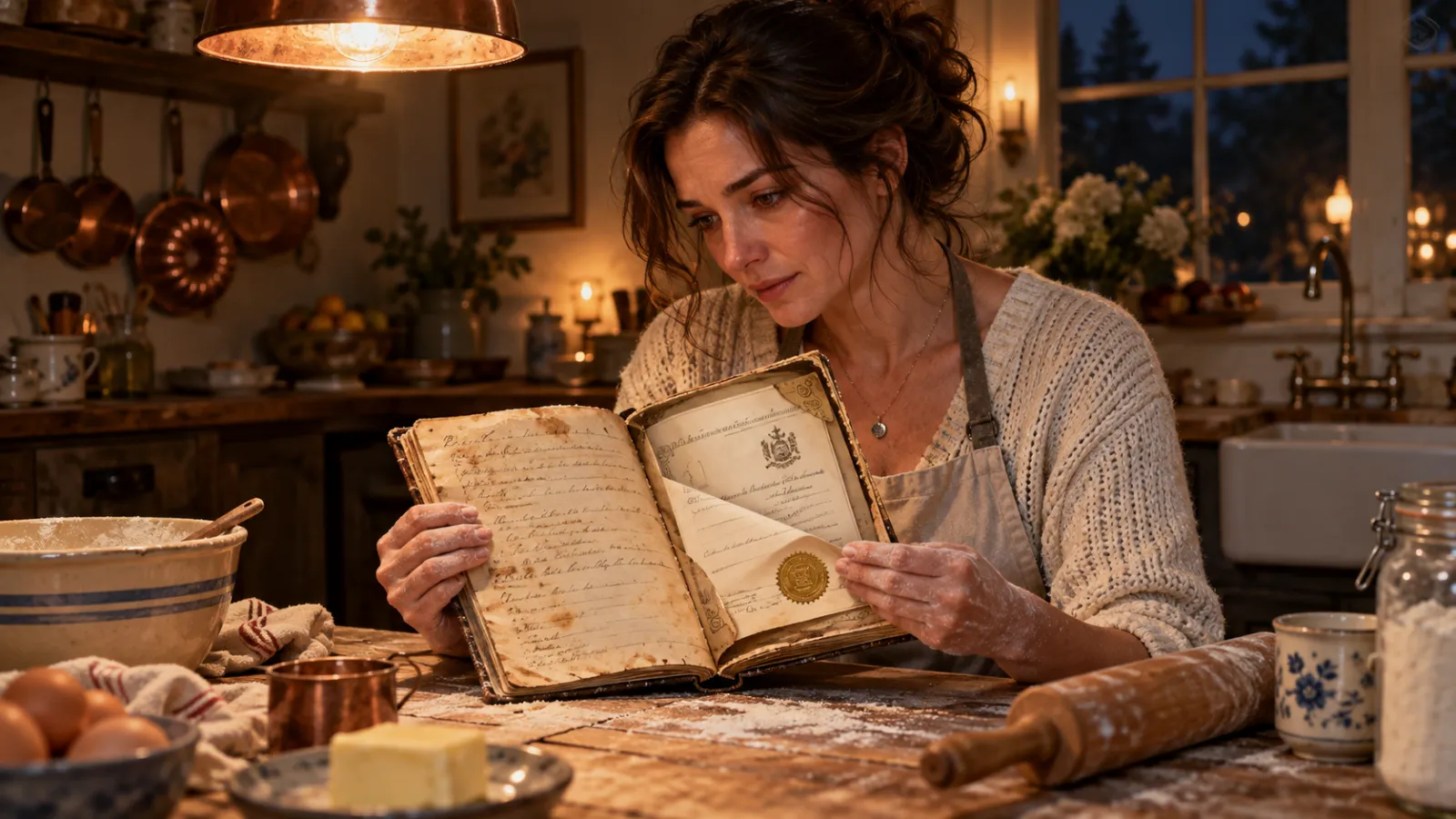
At the estate division in Shaker Heights, my siblings claimed our late mother's suburban townhouse and luxury car, shoving her grease-stained recipe notebook into my chest as my petty share. But glued between two yellowed pages lay a secret partnership charter that changed everything.
Chapter 6: A Kitchen That Still Smells of Apples
The morning sun broke through the tall timber trusses of the restored 19th-century brick flour mill in Chagrin Falls, casting long golden rectangles across polished white marble countertops. Through the open arched windows, the sound of the cascading river below blended with the steady, rhythmic hum of commercial stone-deck hearth ovens.
The air inside the flagship bakery was thick and sweet with the aroma that had defined my childhood: roasted Northern Spy apples, freshly ground Sri Lankan cinnamon, dark Madagascar vanilla, and the rich, nutty fragrance of browned butter puff pastry. By seven in the morning, a line of eager customers already stretched down North Main Street, waiting for the first loaves of sourdough and the morning batch of heirloom apple pies.
I stood at the central wooden prep table wearing a pristine white double-breasted chef’s jacket with Chloe Holloway, Master Baker embroidered across the chest in discreet navy thread. Flour dusted my forearms and the edges of my apron as I demonstrated the delicate six-fold lamination technique to three young apprentice bakers from the Cleveland Institute of Culinary Arts.
"The butter cannot be warmer than fifty-four degrees when you make the first turn," I explained, guiding a young woman's hands as she guided the rolling pin over the layered dough. "If the fat melts into the flour, you lose the flaky crumb. Baking is not about force; it is about respecting the temperature of the room."
A brass bell chimed above the heavy glass entry doors. Among the bustling crowd of morning patrons, two figures stood awkwardly near the pastry display cases, looking completely out of place amid the warm golden light and cheerful chatter.
It took me a moment to recognize Raymond and Vanessa.
Six months had transformed them both into ghosts of their former arrogance. Raymond wore an off-the-rack navy suit that hung loose from his shoulders, the cuffs frayed and the collar visibly worn. His luxury German sedan was gone; his development business had collapsed into receivership when KeyBank foreclosed on the Shaker Heights townhouse in February. He was working as a junior leasing agent for an industrial warehouse park in Elyria.
Vanessa stood beside him in a plain wool coat, devoid of her designer handbags and glittering manicures. Her apartment lease in Shaker Heights had been terminated after the repossession of her car, forcing her into a modest rental duplex in Parma.
When the crowd cleared from the register, Raymond stepped toward the marble counter. His expression was a painful mix of forced humility and desperate hope.
"Hello, Chloe," Raymond said, clearing his throat. His voice lacked every trace of the booming condescension he had used in Mom's living room. "The new flagship looks incredible. Mom would have been so proud of what you've done here."
I set my rolling pin on the maple block, wiped the flour from my fingers with a clean linen cloth, and looked directly into his tired eyes. "Mom was proud of this kitchen thirty years ago, Raymond. You just never bothered to step inside it."
Vanessa stepped forward, her hands fidgeting with the zipper of her coat. "Chloe, we came to talk because the last six months have been a complete nightmare. The banks took everything from the estate, and our crushing legal debts have left us with nothing. As your family, we thought there might be a corporate leasing role for Raymond, or perhaps a monthly stipend from Mom’s bakery dividends."
"A stipend?" I repeated, my tone even and calm, carrying neither malice nor pity.
"Just until we get back on our feet," Raymond pleaded, leaning over the glass case where rows of golden, lattice-topped pies glistened under the display lights. "You have millions in equity here, Chloe. You have more than enough for all of us. Blood is blood."
"Six months ago, at Mom's mahogany table," I said quietly, "you told me that blood did not run between us. You told me that second-hand scraps were all an adopted daughter deserved. You laughed when you threw her notebook into my chest."
Raymond flinched as if struck, his gaze dropping to the polished floorboards.
"This company was built by hands that were blistered by fire and dusted with flour," I continued, gesturing to the open kitchen where loaves of crusty sourdough were being pulled from the brick ovens on long wooden peels. "Mom worked forty years to create this. I don't give handouts to people who spat on her memory while she was alive."
I paused, looking between my brother and sister. "However, Orchard House is an honest business. We are hiring kitchen stewards. It pays twenty-two dollars an hour with comprehensive healthcare benefits. You will scrub roasting pans, haul fifty-pound flour sacks, and wash mixing bowls from six in the morning until three in the afternoon. If you want an honest wage earned with your own hands, you can start on Monday."
Raymond’s face burned with deep crimson humiliation. He opened his mouth to protest, but the quiet authority in my voice left him utterly defenseless. He looked at Vanessa, who lowered her head in bitter silence. Without another word, Raymond turned toward the glass doors and walked out into the brisk morning air, with Vanessa trailing behind him.
I took a deep breath, letting the sweet fragrance of warm apples and roasted cinnamon fill my chest.
Behind the counter, mounted securely in a museum-grade glass shadowbox on the restored brick hearth, rested Evelyn's vintage blue cloth notebook. It was open to page forty, where the faint, pale outline of her founding signature stood preserved under the museum glass.
I turned back to the apprentice bakers, picked up my rolling pin, and smiled as the morning sun warmed the kitchen. Mom’s ovens were burning bright, and her table would never be empty again.
The end