Family4 min read
The Empty Crib in the Attic
While clearing out her late mother's attic in Granville, Ohio, thirty-two-year-old Joanna discovers a padlocked oak crib containing an old birth certificate bearing her exact name—dated three years before she was born. Digging into the town's past reveals an unforgettable sacrifice.
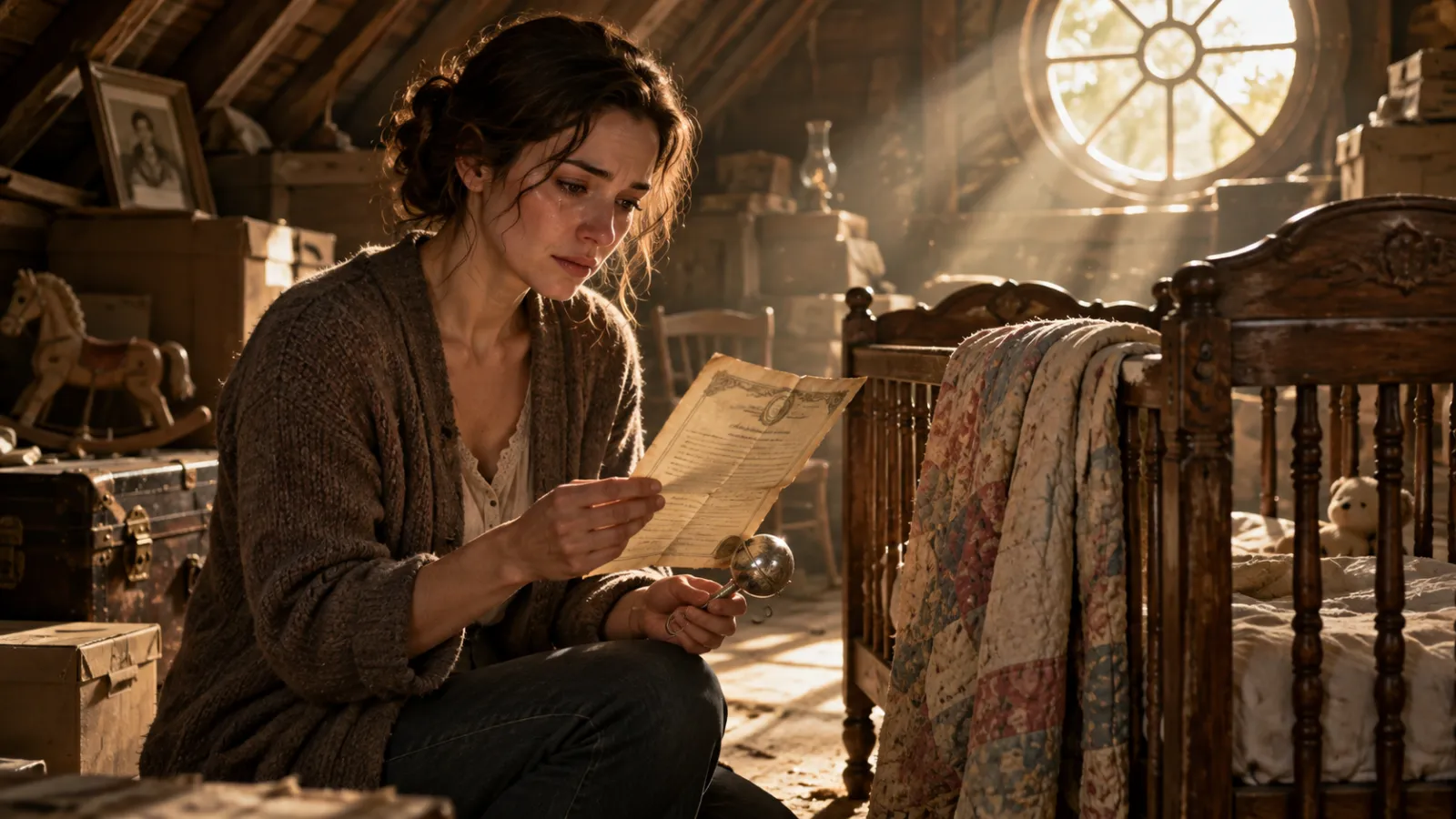
Chapter 5: Snow and Smoke in 1994
The fire in the hearth snapped, sending a brief shower of orange sparks against the wire screen. Dr. Henderson took a sip of his tea, set the porcelain mug down on the edge of his desk, and rested his hands on the open pages of the ledger.
"David and Sarah's farmhouse had an old iron stove in the parlor," Dr. Henderson began, his voice soft and measured. "The state fire marshal determined that a cracked chimney liner allowed heat into the dry oak framing between the walls. By two in the morning, the second floor was already a furnace. David and Sarah were trapped upstairs. The stairs collapsed almost immediately, cutting them off."
I listened without moving, the room silent except for the wind outside brushing against the eaves.
"Your bedroom was on the ground floor," the doctor continued, looking directly into my eyes. "The antique crib from the attic sat in the parlor alcove near the kitchen door. When the smoke poured into the room, four-year-old Joanna woke up. She did not panic. She ran to your crib and climbed up the slats to lift you out."
Dr. Henderson reached across the table and touched the singed bonnet.
"She took her own eyelet bonnet and tied it over your head to shield your face from falling embers. That was where the brim caught fire. She smothered the embers with her bare hands, blistering her palms. Then she found a wooden bushel basket David had brought in from the apple orchard. She laid you inside, wrapped you in that thick wool patchwork quilt from the settee, and dragged the basket across the kitchen floor."
My throat burned as if the smoke of that thirty-year-old night were in the room with us. "She dragged a bushel basket through the snow?"
"She did," Dr. Henderson said, his voice tightening with reverence. "The side door had an old thumb latch she could barely reach. She kicked it open into a howling blizzard with sub-zero winds. A four-year-old girl, wearing only flannel pajamas and bare feet, dragged that heavy apple basket fifty yards through snowdrifts that reached past her knees. She pulled you all the way to the cedar fence line, where the post shielded the basket from the biting north wind."
He paused, his eyes wet behind his wire-rimmed glasses.
"When Hank Miller and I reached the property, the farmhouse roof was falling into the cellar. We saw the path through the snow and ran toward the fence. Little Joanna had collapsed across the basket, using her own body as a final shield against the falling ash and freezing wind. She had inhaled lethal amounts of smoke while lifting you from the room. She was gone within minutes of our arrival. But inside the wool quilt, you were warm and breathing."
Tears streamed down my face. Caleb reached over and took my trembling hand in both of his, his head bowed.
"The next morning," Dr. Henderson said softly, "Miriam and Thomas arrived at Licking County Memorial Hospital. Miriam was David's cousin by marriage, but she was family through and through. She sat in the pediatric nursery for twelve hours without leaving your side. Because David and Sarah were tenant farmers who lived isolated out on the ridge, you had not yet been formally issued a county birth certificate. Your parents had simply called you their little winter bird."
Dr. Henderson stood up, walked to his desk, and picked up a slim manila folder he had kept tucked inside the ledger.
"The probate judge asked Miriam what name should be entered on your official adoption decree," the doctor said, handing the folder to me. "Miriam told the court that no child had ever been loved more fiercely than you were by your sister. She said, 'This little girl breathes today because Joanna Claire gave everything she had to pull her from the dark. She will carry her sister's name. Not as a substitute, but as a living crown of courage.'"
I opened the folder. Inside was a letter written on Miriam's familiar stationery, dated May 14, 1995. The handwriting was unmistakable, written with the green ink Mom always used for her school lessons.
My darling Joanna, the letter began.
If you are reading this, you have found the oak crib in the attic. Thomas and I pulled that crib from the ruins of your father's parlor after the fire was out. Thomas chained the railing shut and locked it with a brass padlock. We made a promise that you would never sleep in the shadow of grief, nor bear the heavy burden of survival until your own spirit was strong and rooted.
You were never a replacement, my sweet girl. You were the continuation of the greatest act of love this family has ever known. When you look in the mirror, do not see a ghost. See the sister who loved you enough to walk through fire, and know that you carry her courage in every step you take.
I pressed the letter against my chest, sobbing softly in the quiet study. Every doubt that had chilled my heart in the kitchen that afternoon evaporated. Mom had not hidden the crib out of shame or cold detachment. She had sealed it to protect my childhood, waiting for the day I was strong enough to understand the treasure I carried.
"Your mother was a wise woman, Joanna," Dr. Henderson said quietly, resting a gentle hand on my shoulder. "She gave you thirty-two years of peace before asking you to carry the honor."
End of chapter 5