Family6 min read
Surprised to See Me
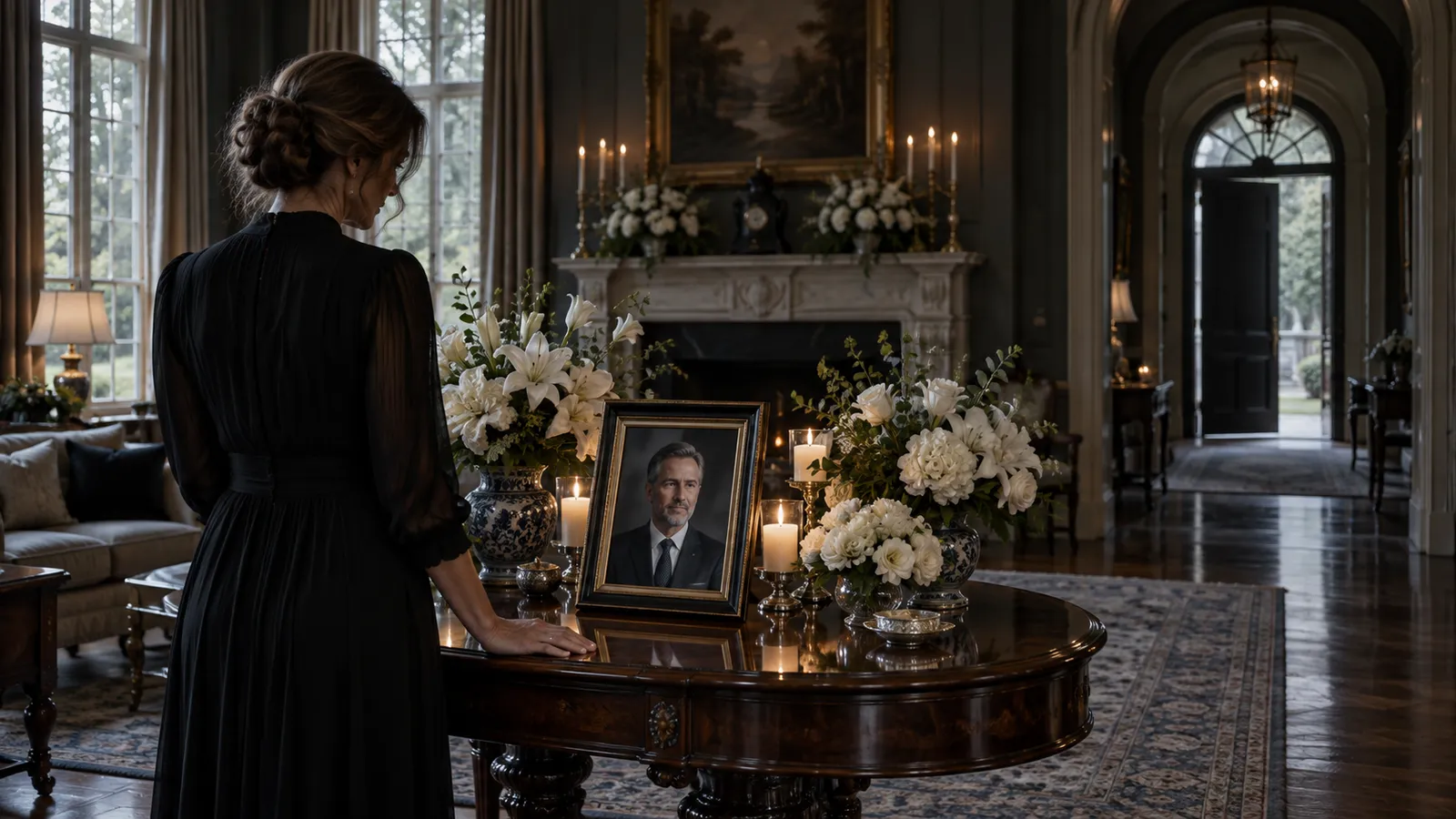
My mother set her wedding ring on the table beside my father's memorial photograph and said she was finally free. My brother asked about the money. Then the door behind us opened.
Chapter 3: What Odette Said Last
Giles came back to the study on the morning of October 18, a Sunday, with a second folder he had not brought the day before. He set it on the desk in front of my father without opening it, the way a doctor sets down a chart before sitting down, and then he pulled out the chair across from my father and looked at me.
"Your father asked you to stay," Giles said. "That means you hear this the same time he does. If at any point you want to leave, tell me."
I said I would stay.
My father opened the folder.
The transfer document was seventeen pages. The first page was a cover sheet with the audit reference number, the date of the internal flag, and the name of the CFO who had referred it. Pages two through nine were tables: date, account origination, account destination, amount, authorization code. Giles had highlighted the authorization code column in yellow on every page. All the codes were the same.
On page ten, Giles had inserted a single printed sheet that was not from the audit itself. It was a registry printout from the Delaware Secretary of State's office. The registered agent, the date of formation, the registered name: Barnaby LLC. The managing member listed was Barnaby Ellington.
My father read it without changing his expression. He turned to page eleven.
I read it too. The managing member listed was Barnaby Ellington.
Giles waited until my father had finished the full seventeen pages, which took twelve minutes. I know it was twelve minutes because I was watching the clock on the study wall, the old nautical one my grandfather had owned that my father kept wound even though it ran two minutes fast. My father closed the folder.
"The authorization codes," he said.
"Odette's household codes," Giles said. "Same codes for every transfer over the twenty-four months. No variation, no attempt to obfuscate. The most likely interpretation is that Barnaby had them written down somewhere or had been told them directly."
"Did you ask her?"
"No. That's your conversation."
My father nodded. He looked at me. "Give us an hour," he said.
I went to the kitchen. I did not close the study door all the way when I left — I meant to, and then I did not. I made coffee and stood at the counter and listened to the house, which was very quiet. The housekeeper had not come in. Barnaby had left the night before after a conversation I had not been present for, and he had taken a bag, which meant he had either packed in a hurry or he had known for some time that he might need to leave quickly. My mother was somewhere in the house; I had not seen her since the memorial the day before.
After about fifteen minutes, I heard the parlor door open at the end of the hall.
My father's study was off the hall, three doors down from the parlor. The study door was open two inches. I was in the kitchen, which was at the hall's other end. The distances in the Westport house were significant: eleven rooms, a wide central hall with a stone floor that carried sound cleanly in both directions. I heard the parlor door open. I heard my father's footsteps — I knew them: heavier on the left foot from an old ankle injury, a slight irregularity at the top of each stride. I heard him walk to the parlor and stop.
I did not hear what was said.
What I heard, after a period of silence that was long enough for me to refill my coffee and come back to the counter, was my mother's voice. One sentence, even-toned, the same cadence she used when she was agreeing to a practical arrangement — a dinner time, a contractor schedule, the logistics of any situation that had been decided before she was consulted.
Then I heard my father's footsteps come back toward the study.
Then I heard the parlor door close.
I went back to the study door and pushed it open. My father was at the desk again, looking at the folder. Giles was still there, in the same chair, with his briefcase on his lap.
"Done?" I said.
"In terms of the marriage," my father said, "yes."
He said it the way he said things that were settled: without drama, without evident feeling, with the same weight he gave to a closed item on a board agenda. He looked up at me and he said: "She accepted the settlement arrangement. She will have the accounts in her own name and the cottage. The Westport house and the company stay with me. She won't contest the Barnaby matter."
I said: "She didn't ask about him?"
"No," my father said.
Giles cleared his throat. "I'll need to prepare the documentation this week. There are some—"
"This week is fine," my father said.
Giles stood and picked up both folders and put on his coat. He said something quiet to my father about having a call Monday, and my father said Monday was fine, and then Giles left. I heard the front door, and then the circular drive, and then his car pulling out.
I sat down in the chair Giles had vacated. The folder was on the desk between us. The transfer document.
"She knew," I said.
"She knew Barnaby had the codes," my father said. "Whether she knew what he did with them, I can't say with certainty. I have a position on it."
"What's your position?"
He was quiet for a moment. "That she knew what she was allowing," he said. "Not every detail. But the direction."
I sat with that for a while. Outside the study window the back garden was in October color, the maples past their peak, a few yellow leaves on the terrace stones. One of the wooden chairs on the terrace had blown sideways in last week's wind and no one had righted it. I had been meaning to mention it to someone.
"What happens to Barnaby?" I said.
"His attorney will contact my attorney this week. There are several possible arrangements. None of them are good for Barnaby."
"But he won't go to prison."
My father looked at me. "He might," he said, "if that's what he prefers. The money is recovered either way. I'm not inclined toward mercy, but I'm also not inclined toward a public criminal proceeding. Those are not the same thing."
I did not know what to say to that, so I said nothing. We sat in the study for another half hour, not talking much, while the light through the window moved and the garden went through its October colors. My father made a few notes in a leather-bound notebook he kept in the desk drawer and I drank my coffee and looked at the upturned chair on the terrace.
At some point my mother walked past the study door. She did not stop. I heard her footsteps on the stone floor of the hall, unhurried, going toward the stairs. I heard her go up.
My father did not look up from his notebook.
I stayed in the study for two hours. Then I went to get my coat and my keys and I told my father I was going back to New Haven. He said to drive carefully. I said I would.
I drove back in the late afternoon and I parked in my building's lot and I sat in the car for a while before going up. The Ellington Capital building in Hartford was visible on clear days from the highway, a glass-and-steel tower my father had moved into in 2014. I had driven past it on the way back without thinking about it, the way you drive past things you have always known were there.
I thought about my mother's one sentence from behind the parlor door. I had not heard the words, only the cadence. It was the cadence of someone closing an account.
End of chapter 3