Family6 min read
Surprised to See Me
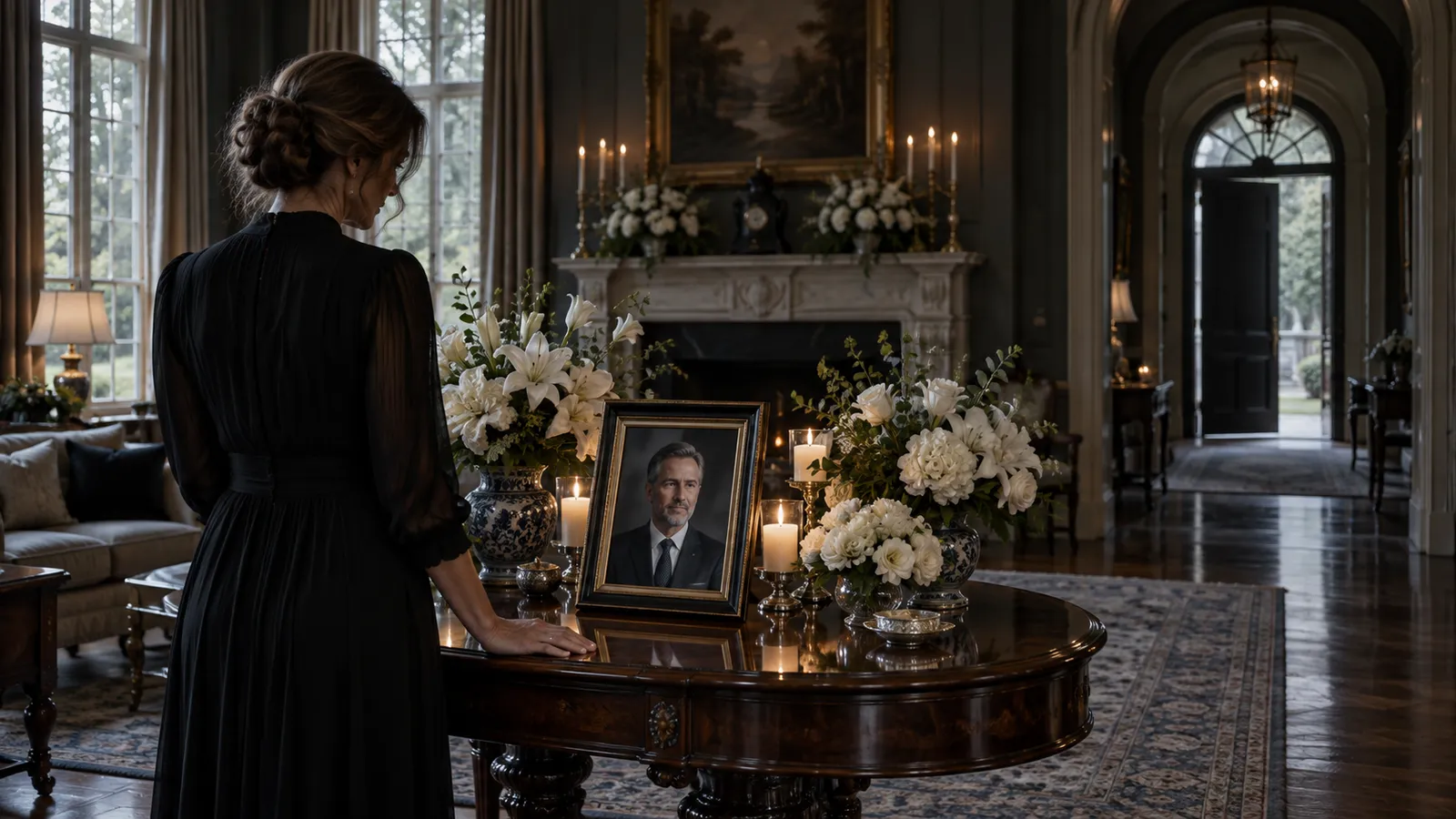
My mother set her wedding ring on the table beside my father's memorial photograph and said she was finally free. My brother asked about the money. Then the door behind us opened.
Chapter 4: A Question He Didn't Answer
I drove back to Westport on November 1, a Sunday, because my father had called and asked me to come. He did not say why. I said yes and drove down in the morning with a bag for one night, not knowing how long the conversation would take.
The Westport house was quieter than I had ever known it. Odette had been gone for nine days. She was staying at her sister's place in Greenwich, which I knew because the housekeeper had mentioned it in passing and not because my father had told me. My father was in the habit of not volunteering information about my mother that he did not believe was directly relevant, and he had extended this habit into the current situation seamlessly, as though her departure were an administrative matter he had managed cleanly and moved on from.
Barnaby had retained a lawyer. I knew this from a voicemail left on my phone on October 22 by mistake — the lawyer had meant to call my father's cell. The message was brief and professional. I had not called back. I was not a party to whatever Barnaby was working out with whoever he was working it out with.
My father was in the study when I arrived. He had made tea, which was unusual — he was a coffee person, had always been a coffee person, and the fact that he had made tea struck me as a sign of something, though I could not say what. He poured a cup for me without asking and set it on the edge of the desk and sat back in his chair.
"How's the New Haven project?" he said.
We talked about the New Haven project for ten minutes. A renovation on a nineteenth-century brick building in the Wooster Square neighborhood I had been working on since June; I had opinions about the load-bearing assessment and the window profiles. My father asked reasonable questions. He was a man who could give ten minutes of genuine attention to any subject if it was the person across from him who cared about it.
After the ten minutes, he refilled his tea and set the kettle back on its base and looked at the desk.
"You wanted to ask me something," he said.
"I've been figuring out how."
"Take your time."
I took a moment. Outside the window the garden was in November now, past October's color, the chairs on the terrace still out and slightly damp from the rain earlier in the week. Someone had righted the one that had blown sideways. I did not know if it had been my father or the housekeeper, and for some reason that mattered to me in a small way I couldn't account for.
"Did you know what it would cost me?" I said.
My father looked at me. "Define cost," he said.
"Three weeks thinking you were dead," I said. "Three weeks of the memorial and the lilies and the photograph and the choosing a photograph and calling the cottage and calling the contractors and not sleeping and then the — the ring on the table and not knowing what was happening. Did you know that was what it would cost me, specifically? Not Barnaby, not Odette. Me."
He was quiet for a moment. The nautical clock on the wall ticked its two-minutes-fast tick.
"Yes," he said. "I knew."
"And you did it anyway."
He did not say yes to that. He did not say no. He looked at his tea and then he said: "I didn't find a way around it."
"That's not the same as being unable to find a way around it."
He looked at me then, and there was the thing again — the shift in his face I had seen at the memorial, the thing I had not been able to name. It was something between acknowledgment and grief, though grief is not a word I would normally apply to my father. It was the expression of a man who has reached the limit of what his frame will permit him to admit, and has landed there, and is not moving forward or back.
"No," he said. "It's not the same."
I drank my tea. He drank his. The clock ticked. There was a cardinal in the oak tree outside the window, a male, very red against the gray bark, and it moved from branch to branch twice and then was gone.
"What was it worth?" I said. "What you found out."
"It confirmed things I needed to have confirmed before I could act on them."
"That's not an answer."
"I know," he said. "It's what I have."
I looked at the folder on the desk, the one with the transfer document. It was still there, in the same place it had been two weeks ago, which meant my father had not moved it, which meant he had been looking at it or at least choosing not to remove it. I did not know what to make of that.
"Were you watching me too?" I said. "During the three weeks."
"Giles reported on you."
"And?"
"And nothing," he said. "There was nothing to report."
I had known that. I had read the briefings. I knew what I had and hadn't done during those three weeks. But there was something I needed to understand about the framing — whether the absence of action had registered with my father as absence or as presence, as something neutral or something meaningful.
"Did it occur to you," I said, "that I wasn't doing anything because I was grieving?"
He set his tea down. "Yes," he said. "That occurred to me."
"And it still confirmed something."
"It confirmed you," he said. "Yes."
I stood up. I picked up my bag from the floor by the chair, where I had set it when I came in. I stood there for a moment with the bag and then I set it back down, because I was not leaving yet; I had just needed to hold something. I sat back down.
"I'm not going to tell you it was worth it," I said. "What it cost me."
"I'm not asking you to."
"And I'm not going to tell you it wasn't."
He nodded. This was, for my father, the equivalent of a great deal.
We sat in the study for another hour. He asked about the window profiles again and I told him about the original hardware and then we talked about something else that I can't recall now, something unrelated to any of it, something that had to do with the contractor and a delivery that had been delayed. At some point he stood and took the cups to the kitchen and came back and stood by the study door.
"Drive carefully," he said.
"I will."
I drove back to New Haven in the early afternoon. The highway was clear. The Ellington Capital building in Hartford was visible through the passenger window as I passed — glass and steel, thirty-two floors, my father's name on the signage in a sans-serif font he had chosen himself in 2014. I had seen it ten thousand times. I watched it pass.
I didn't have an answer to my own question either. Whether it was worth it — what I had lost in those three weeks, what I had learned about my family in the weeks after. Whether knowing is always better than not knowing, or only sometimes, or only when you have the standing to decide that the knowing is worth the cost to the people who are not you.
My father believed it was worth it. He was not a man who would have done it if he hadn't. That was not comfort, but it was true.
I turned off the highway and drove the last ten minutes to my building and parked in my spot and sat for a while with the engine off. The light was going in the way of early November afternoons, gray and fast. I thought about the cardinal in the oak tree, the very red one against the gray bark, gone almost as soon as I noticed it.
I went upstairs. I made dinner. I did not call anyone.
The end