Family5 min read
I Paid for Every Room
My daughter told me I'd only slow them down. I didn't argue. I picked up my phone instead. I had paid for every room.
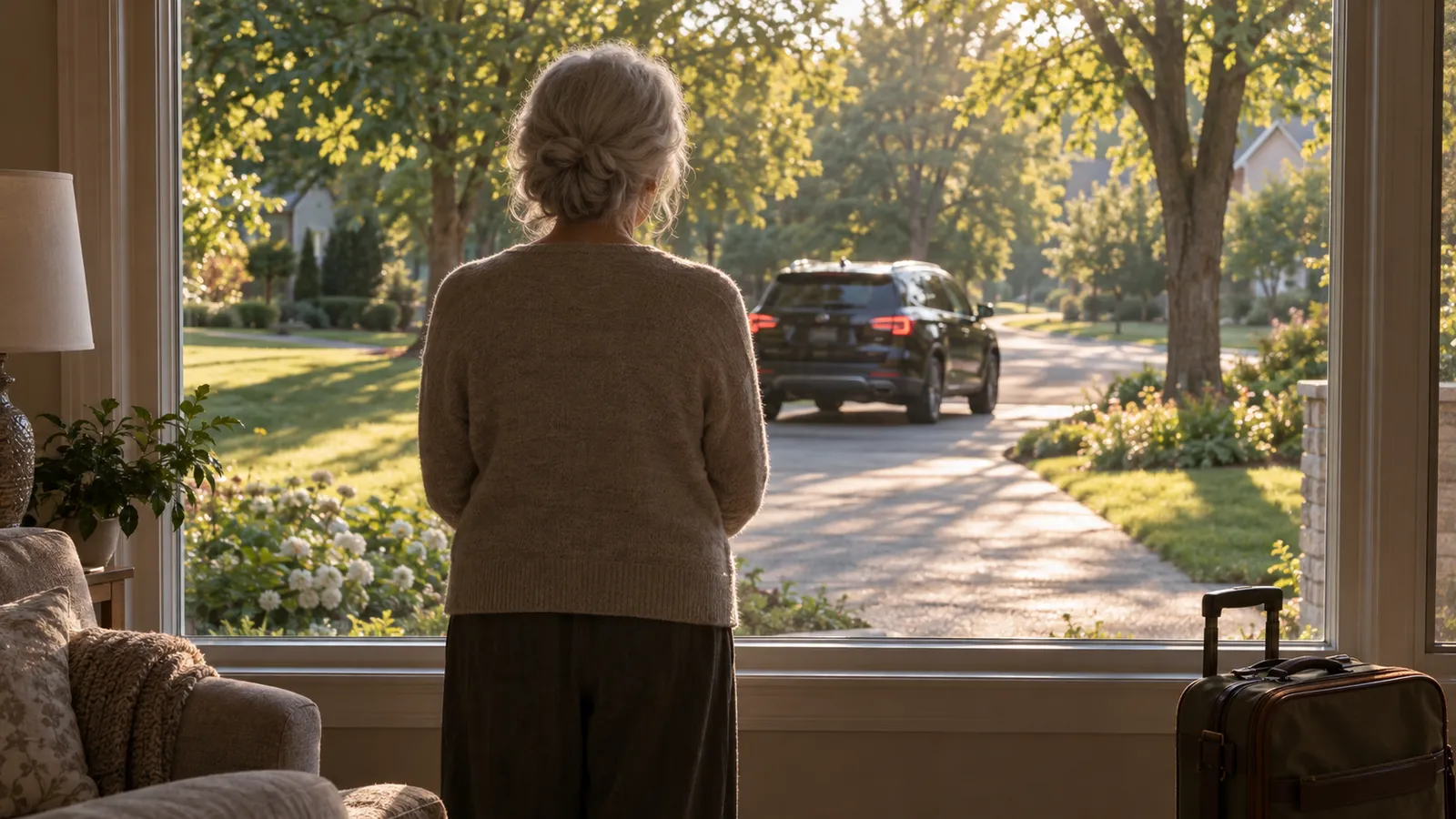
Chapter 2: What February Cost
The trip had been my idea.
That is important to say, because by the time Delphine was loading the car she had somehow come to own the concept of it, in the way she owns most things once she organizes them. She had a folder for it. She had a spreadsheet. She had emailed the resort fourteen times about the room layout, the view from each suite, the distance from the parking to the elevator, whether the pool heated to a consistent temperature after October. By July she spoke about the trip as though she had been dreaming of it for years and I had been invited along.
What happened was this.
In February, my friend Patricia Welch turned seventy. Patricia is not a close friend — we served on the same library committee for six years and we have each other's numbers — but she had a party at her daughter's house, the kind of party with a balloon arch and a caterer and forty-five people who all said seventy is the new fifty. I drove myself there and drove myself home and sat in my kitchen for a while afterward looking at the calendar on the refrigerator.
My birthday is February 19th. I had turned 74 that year. There was no party. Delphine sent flowers and called in the evening. She talked for eleven minutes, mostly about a problem she was having with Annika's school — a scheduling conflict with the AP History exam and a club commitment. I didn't mind. I'm not a person who needs a party. I never have been. Harold's idea of a birthday was a steak dinner at the same restaurant every year, and I found that more honest than balloons.
But I am a person who sometimes wants to be in the same place as her family.
I called Delphine the following Saturday. I said I had been thinking about a family vacation, something before the summer got too hot, maybe somewhere with a beach. I said I had looked at a place on the Gulf coast — Pelican Crest, a resort that did not look like a resort from the outside, which I liked — and I could cover the rooms. A long weekend. The four of us.
She said, "Oh, Mom, that sounds lovely." She said it the way people do when they mean it.
I booked the rooms in April. Two adjacent suites, three nights. The resort had a policy where the rooms could be modified or canceled up to forty-eight hours before check-in, so I booked them in April even though the trip was July, because I liked having things settled. Total charged: $8,400. I paid it from my savings account, which is where I put the money I don't need for regular expenses, which is most of what I have.
I texted Delphine the confirmation.
She called that afternoon. She said, "Mom, this is so generous." She said she would handle all the planning from here, that I shouldn't worry about anything, that she would research the restaurants and make reservations at the best one for Saturday night. She asked if she could forward the confirmation to Corbin's assistant to add to the family calendar. I said yes. She said, "You're going to have such a good time."
I believed her. I know how that sounds.
I did not understand until late June that I was not going to be managing my own participation in this trip.
Delphine called on the twenty-first. I know the date because I keep a log of our calls in a small notebook, the kind with a magnetic clasp — just a date, a subject, a note if something was decided. It is a holdover from thirty years of bookkeeping. She said she wanted to talk about the trip, and I thought she meant logistics — what time to leave, whether I should drive myself there or ride with them. I thought we were going to discuss whether to stop at a rest stop or push through.
She said, "I've been thinking, and I just — I want to be honest with you. The resort is very active. There's a lot of walking. The beach is at the bottom of a slope."
I said, "I know. I booked it."
She said, "Right, but. You know how you are on long days. You get tired, and then you can't keep up, and then everyone has to slow down, and it's—"
I said, "I'm fine."
She said, "I know you think you are."
There was a pause. I could have said: I am 74 years old, not 94. I walk two miles every morning. I attended Patricia Welch's birthday party and I danced twice. I know my own body. I could have said: I paid $8,400 for this vacation and I paid it because I wanted to be there, not because I wanted to fund a trip for you and your husband and my granddaughter. I could have said any of that.
I said, "Let's see how everyone feels closer to the time."
She said, "You're right. Let's do that."
I sat with the phone in my hand for a moment after we hung up, in the kitchen, with the afternoon light coming in at an angle through the window above the sink. I could have called her back. I could have said what I actually thought. I sat there and I did not.
I wrote it in the notebook: June 21. Trip — D says I might find it tiring. See how everyone feels closer to the time.
This is the thing about Delphine: she is not cruel. She genuinely believes she is looking out for me. She has believed this for approximately eighteen years, since I had a small fall on the ice in the winter of 2008 and she drove forty minutes in the snow to check on me. I had a bruised hip and I was embarrassed. She arrived to find me watching a nature documentary and eating soup. She looked genuinely frightened, as if I had nearly died.
After that the dynamic shifted. I'm not sure she noticed. I noticed.
She started calling more, asking how I was, listening to the answer in a way that felt like assessment. When I mentioned wanting to travel somewhere, she would say, "Oh, do you think that's a good idea?" as though the question had become legitimately complicated. She started speaking to Corbin about my well-being in that particular sideways way, the way you speak about someone in front of them when you have decided they're not quite in the conversation.
I kept paying. That was the other thing.
I paid for things because it was one of the ways I could be useful, and I preferred being useful to being handled. I paid for Annika's school trip to Washington — $340. I paid for the new dishwasher when theirs broke. I paid for the graduation dinner when Corbin finished his certification. Each time I paid, Delphine thanked me and the transaction closed, and for a little while after it I felt like a participant.
I understand now what I was actually doing.
I had paid for the rooms. I had paid for something else too, and I hadn't gotten it.
End of chapter 2