Family6 min read
I Paid for Every Room
My daughter told me I'd only slow them down. I didn't argue. I picked up my phone instead. I had paid for every room.
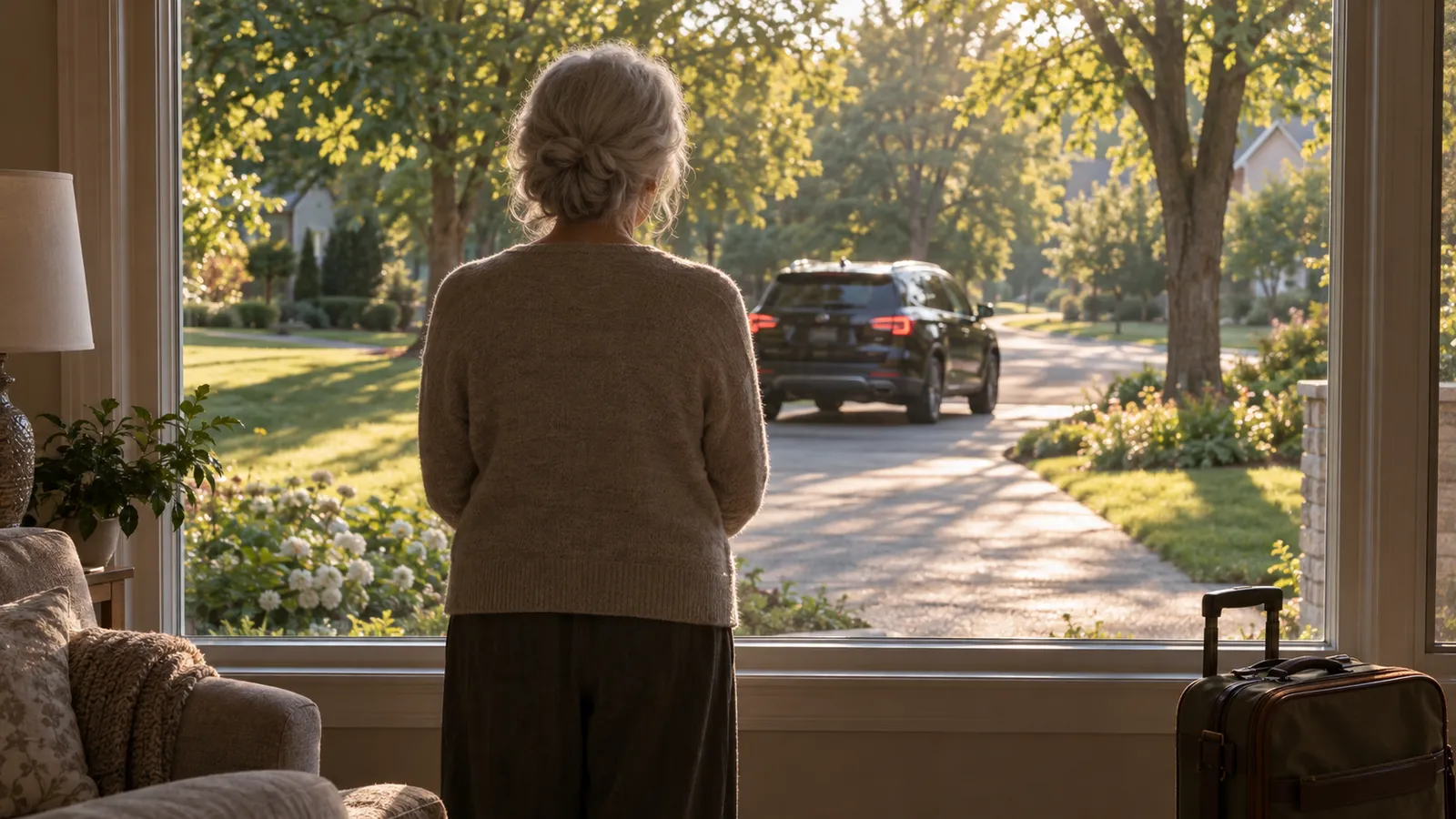
Chapter 4: The Lobby
Annika spent the afternoon on my couch with a book she'd pulled from the shelf, one of those novels with no chapter breaks that young people seem to prefer now — she had looked at my shelf for a while, tilting her head sideways to read the spines, and chosen it without explaining why. I sat in my chair. I did not read. I watched the light move across the room, which is something I do when I am waiting without admitting I am waiting.
At three-thirty I made sandwiches. Annika ate hers at the kitchen table and told me about her AP History class in the fall, about a teacher named Mr. Ferris who she thought was probably the best teacher she'd had, which she said matter-of-factly with no particular enthusiasm, the way teenagers occasionally report good news. I listened and I asked a few questions and she answered them in full, which is another thing she does that her mother doesn't — answer questions rather than redirect them.
At five o'clock I checked the resort app. The cancellation was confirmed. The booking reference still appeared under Past Reservations, with a gray banner that read Canceled — refund processing. The refund would take seven to ten business days. There was no new activity.
At five-twenty Annika fell asleep on the couch with the book open on her chest. I turned off the overhead light and left the lamp on, the one by the window that Harold always called the reading lamp even though he rarely read.
I sat and waited.
My phone rang at 7:04.
The screen said DELPHINE. I sat with it in my hand for one full ring — I counted, which is a habit I have had for many years; it gives me a moment to decide who I am going to be when I answer — and then I picked up.
She said, "Mom."
There was noise behind her: voices, an echoing space, the particular kind of air conditioning that hotel lobbies have, the kind that is cold and slightly loud and always sounds the same in every lobby in every city. She was at the resort. The five-hour drive had taken just under six hours, which was about right for a Saturday in July on the coast highway.
I said, "Hello, Delphine."
She said, "They're saying — the front desk is saying they have no reservation for us."
I said nothing.
She said, "They say the reservation was canceled. Under your name."
I said, "Yes."
There was a pause. She said, "You actually canceled it."
I said, "I told you I was."
I heard her breath. I heard Corbin's voice in the background: What is she saying? I heard Delphine put her hand over the phone, which doesn't muffle anything the way people think it does. I heard her say, She says she canceled it. I heard Corbin say, She knew what she was doing.
He meant it as an accusation. I took it as a compliment.
Delphine came back on the line. Her voice was different — lower, and very controlled, the way she is when she has decided not to cry in public. I know all of her voices. I have been listening to them for forty-two years.
She said, "Mom, we're standing in the lobby. We've been driving for six hours. There's nowhere to stay. It's high season. Do you understand what you did?"
I said, "I understand it."
She said, "The rooms were $8,400. We had reservations."
I said, "I had a reservation. I canceled my reservation."
She said, "Mom." She stopped. She started again. "I don't understand why you did this."
I said, "You know why I did this."
She was quiet for a while. The noise behind her shifted — Corbin saying something to someone at the front desk, a polite professional voice responding.
I waited. Annika shifted on the couch but didn't wake up.
Delphine said, "We had that conversation in June. I was trying to — I thought it would be better for everyone."
I said, "You thought it would be better for you."
Another pause. Longer this time.
She said, "Corbin's sister is driving down from Baton Rouge. She's going to be here at nine."
I said, "I see."
She said, "Did you know about that?"
I said, "I saw her name on the guest list when I canceled."
She said nothing.
I said, "When were you going to tell me?"
Another silence. She said, "Mom, she's already on the road. We can't — there has to be somewhere to stay. Can you just—" She stopped. Softened. She said, "Can you call them? I can give you the front desk number, they're right here. You just have to tell them it was a mistake. They might be able to reinstate it."
I said, "It can't be reinstated. I read the cancellation policy when I booked."
She said, "Then can you book new rooms? If you explain—"
I said, "Delphine."
She stopped.
I said, "I'm going to need you to hear me. I am not going to call the resort and tell them it was a mistake, because it wasn't a mistake. I canceled the reservation because I paid for it and I was left out of it, and I want you to understand that that is what happened."
She was quiet.
She said, "I hear you."
There is a sound people make when they have run out of other options. I have heard it a few times in my life — once when my husband called from the hospital the morning his father had a stroke, once when Delphine called from a parking lot the winter she and Corbin were having that bad year. It is not exactly crying and not exactly asking. It is something more like the voice discovering, mid-sentence, that the thing it expected to be there isn't.
Delphine's voice did that thing.
She said, "I'm sorry."
I said, "I know."
She said, "I should have — I shouldn't have said it the way I said it. At the door."
I said, "You'd been saying it since June."
She said, "I know. I know that." She said, "I didn't want you to be tired and then be unhappy and then for everyone to have to—"
I said, "You didn't ask me what I wanted."
There was a long silence.
She said, "What do you want?"
It was the first time she had asked me that in years. Not what do you need or is there anything I can do — which are the questions you ask when you have already decided what someone is capable of. She asked what I wanted.
I sat for a moment with it. In the corner of my eye I could see Annika's feet over the arm of the couch, the silver bracelet catching the lamplight.
I said, "I want you to understand what you did."
She said, "I'm trying to."
I said, "That's different from understanding it."
She didn't argue. That, too, was different from what I expected.
I told her I would call the resort in the morning. I told her to find somewhere for the night — there were motels on the highway and the front desk would have recommendations. I told her that if she found somewhere to stay tonight, to text me the confirmation, and I would handle a reservation for the original suites for the last two nights of the planned stay.
She said, "The rooms — you'd pay for them again?"
I said, "One suite. Two nights — Sunday and Monday. For four people."
She said, "Corbin's sister—"
I said, "I don't know Corbin's sister."
She was quiet.
I said, "I want you to tell me something first."
She said, "Okay."
I said, "Whose idea was the trip?"
She was quiet for a moment. Then she said, quietly, "Yours."
I said, "That's what I wanted."
She asked what I wanted. It was the first time she had asked me that in years.
End of chapter 4