Family6 min read
I Paid for Every Room
My daughter told me I'd only slow them down. I didn't argue. I picked up my phone instead. I had paid for every room.
Chapter 3: The Porch
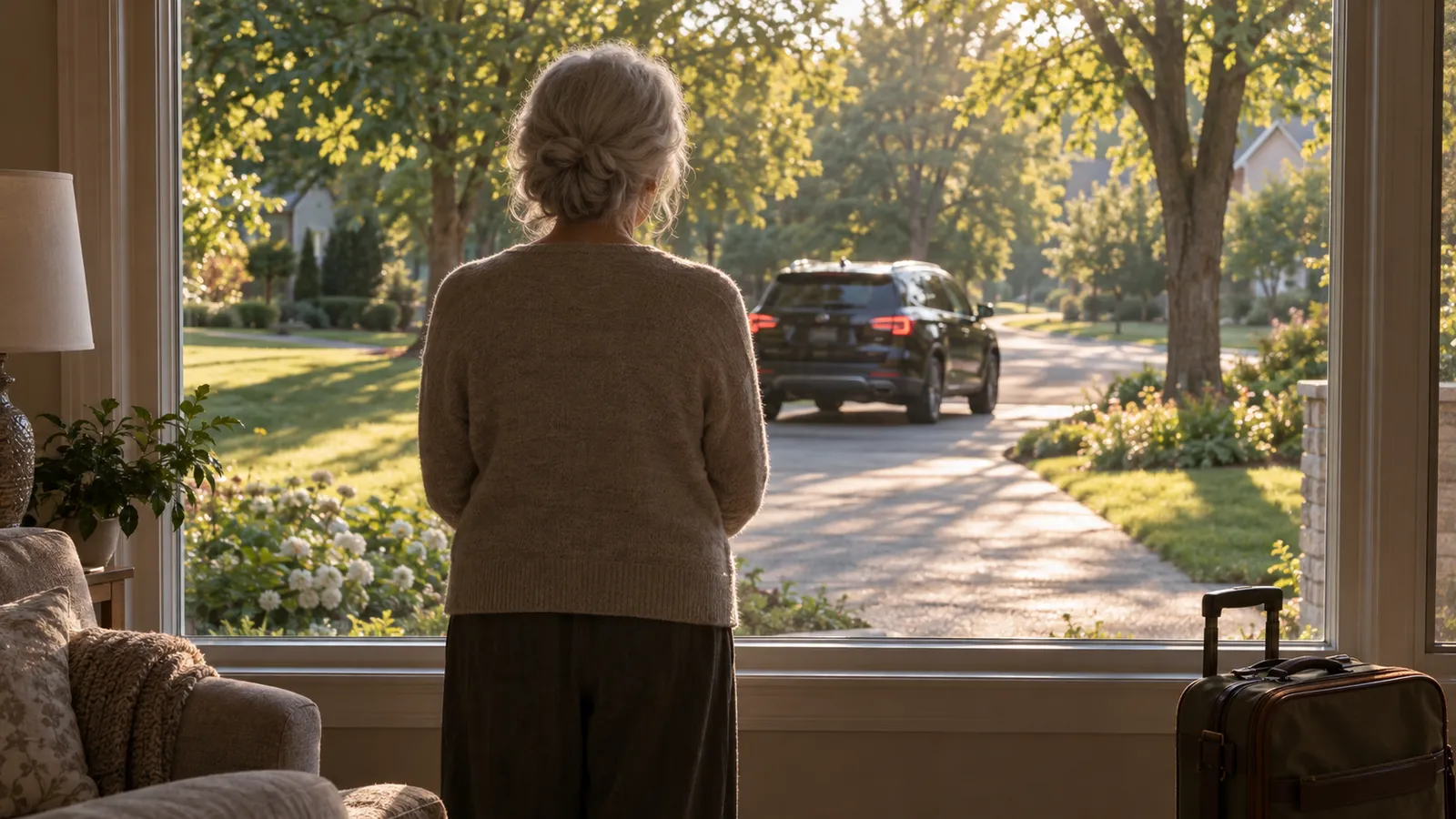
I washed the kettle and the cup and dried them and put them away. It was half past nine. I sat in the living room with the windows open because the July heat hadn't started yet and there was still a little of the morning cool in the air. I could hear two sparrows in the maple by the driveway, the same maple that Harold planted in 1986 when we moved in, which is now thirty-two feet tall and throws shade across the front walk for most of the day.
I thought about what I would have done that first morning at Pelican Crest. I had looked at the resort map when I was booking and I had planned a walk: out to the boardwalk, down to the waterline, back along the sand to the pavilion where they served breakfast until eleven. The map showed three beach access points and I had decided on the middle one, which appeared to have the least slope from the boardwalk to the sand. I had planned it the way I plan most things — slowly, specifically, in my head, writing nothing down, because some plans don't benefit from being written down. I have been planning trips I don't take for thirty years and I have gotten very good at the routes.
My phone buzzed. It was my neighbor Shelby, who knew I was supposed to be away this weekend and was probably texting to ask if everything was all right because she could see my car in the driveway. I read the message — You're home? Everything ok? — and I set the phone down without answering. I was not ready to explain anything to anyone.
I sat there. The sparrows moved from the maple to the roof and back.
At eleven-fifteen I heard a knock.
I thought for a moment it was Shelby, coming over in person because I hadn't responded, which was something she would do. But the knock was two sharp raps, very direct, and Shelby always does three gentle ones. She once told me she learned it from a book on conflict-free communication and she's been doing it ever since. I have always found this charming without being able to explain why.
I opened the door.
Annika was standing on the porch in the yellow shirt, a small backpack over one shoulder. Her hair was still loose from the morning. She looked at me steadily in the way she has — she has always been an unusually direct-looking child, from the time she was small. She does not glance away when she's nervous. She goes more still.
She said, "Hi, Grandma."
I said, "Annika. Where's your mother?"
She said, "On the highway. I asked Dad to drop me off two blocks from here."
I stood there for a moment. I said, "You asked him to drop you off."
She said, "Somewhere near here. I told him I wanted to use the bathroom at the gas station on Freemont."
I stepped back from the door to let her in.
She sat at the kitchen table with a glass of water. I sat across from her. We were quiet for a moment in the way we sometimes are, which I have always found comfortable with her. Annika is not someone who fills silence with talk. She has that from her father, though Corbin's silence is avoidance and hers is something more like attention. There is a difference between a person who goes quiet because they don't know what to say and a person who goes quiet because they are listening.
She said, "Mom already got the cancellation notification. She called me from the car."
I said, "I know she did."
Annika looked at the glass. She said, "She's angry."
I said, "I know that too."
She said, "She was going to turn the car around."
I said, "But she didn't."
She looked at me then. She said, "No. Dad talked her out of it."
Corbin would. Corbin would have done the math: five hours' drive, a confrontation that wasn't going to resolve anything today, the long weekend already sunk whether they went forward or not. He would have said, Let's talk to her when we get back. He is good at the economics of situations even when he is not good at the situations themselves.
Annika said, "Are you okay?"
I said I was.
She said, "You don't have to say that."
I put the kettle on again because I needed something to do with my hands. Annika watched me from the table without comment. She has watched me from that table since she was six years old, and she has always done it the same way — attentive and unhurried, like she is waiting to understand something rather than waiting for a conversation to end.
She said, "I heard what Mom said to you. This morning. The window was open."
I said, "I know."
She said, "I said something to her in the car. Before Dad talked her out of turning back. I said, 'Mom, Grandma is packed, she's ready, it isn't right.' She said, 'It's better this way for everyone.'"
I poured the water over the tea bag and watched the color spread.
I said, "It's all right."
Annika said, "It's not all right."
She said it carefully, not as an accusation, just as a statement of fact, the way she says most things. She picked up the glass and turned it in her hands. She was wearing a little silver bracelet I had given her for her fifteenth birthday, a thin chain with a single flat disc on it. I had almost forgotten I gave her that.
I sat back down. I said, "No. It isn't."
That was the first honest thing I had said about it.
I had spent the whole morning performing a kind of orderliness — the dishes, the dry cups, the resort map route I went through in my head for a walk I wasn't going to take. I had been moving through my own house like someone who had somewhere to be and was simply between departure points. It is what I do when I don't want to feel something. I organize the near future. I plan the route.
I said, "I wanted to be there."
She said, "I know."
I said, "I wanted to be somewhere with my family. I don't need much. I don't need everyone to adjust their pace or slow down. I just wanted to be at the same breakfast table in the morning and know what everyone was having."
She said, "I know."
I said, "The thing that bothers me isn't that she didn't want me there. I can understand her wanting the trip to be a certain way without adjusting it for me. The thing that bothers me is that she never said it. She let me book the rooms. She let me pay. She let me pack a suitcase and stand by the door, and then she said it at the door."
Annika looked at the table for a moment. She said quietly, "Some things you don't get back."
I looked at her. It was something I might have said, the kind of sentence I carry around in my head that I never quite say aloud. And she had said it, at sixteen, without effort, the way people say things they've already thought through.
She said, "I'm sorry, Grandma."
I said, "You're sixteen. You're not responsible for your parents."
She said, "I know. I'm just sorry."
We sat with that for a while. Outside, the sparrows had gone quiet. The tea was getting cold.
She was sixteen and she already knew this about the world: that people will let you pay for something and then decide you're not invited.
End of chapter 3