Family4 min read
The Key Taped Under the Mailbox
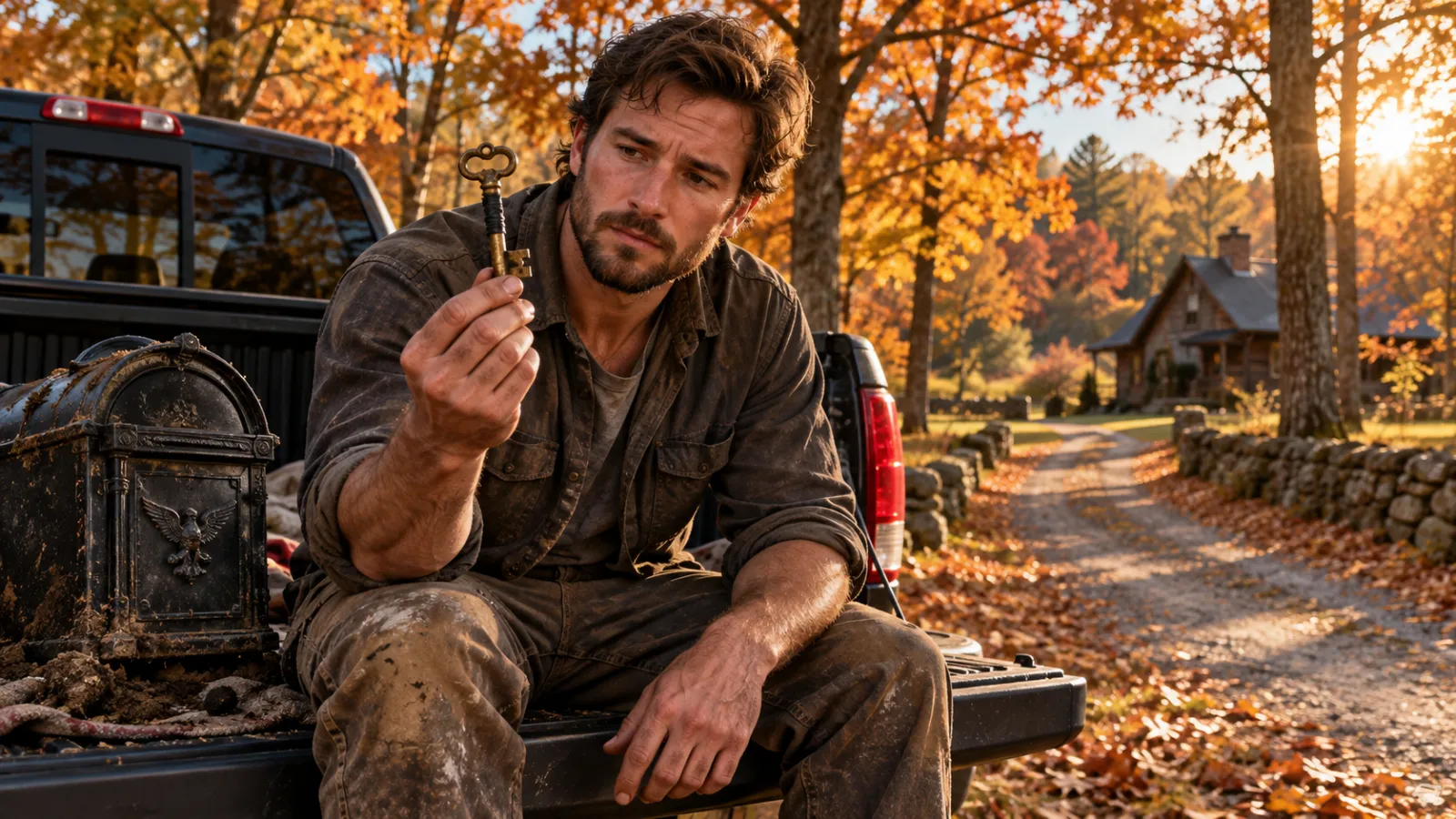
When older brother Raymond auctions Grandpa Arthur's house and leaves Lucas only a heavy cast-iron mailbox as scrap iron, he thinks he won. Restoring the metal in his workshop, Lucas finds an antique brass key and an irrevocable deed to a hidden fifteen-acre lakefront cedar lodge.
Chapter 4: Milepost Forty-Two on the Old Spur
Dawn arrived through a blanket of silver ground fog that crept out of the Mohican State Forest. The morning air was forty-two degrees, sharp and damp with the smell of wet fallen leaves and cold river silt.
I dressed in double-knee canvas work trousers, insulated leather boots, and my heavy flannel-lined canvas coat. I filled a stainless steel thermos with black coffee, grabbed my chainsaw and a recovery strap just in case the old trail was blocked by fallen limbs, and loaded them into the truck. The antique brass key felt solid and reassuring against my ribs in my coat pocket.
By six-thirty, my Silverado was rumbling north on County Road 339.
The route followed the winding path of the Clear Fork river, passing weathered dairy barns, mist-shrouded pastures, and red-roofed covered bridges. Beyond the village of Perrysville, the paved road ended, giving way to crushed gravel that rattled against the truck floorboards.
I kept Arthur's hand-drawn map unfolded on the passenger seat.
His instructions were exact. Two miles past the abandoned grain elevator, I came upon a narrow opening in the tree line where a decommissioned railroad grade intersected the country road. The steel tracks and creosote cross-ties had been removed in the late seventies, but the raised ballast roadbed remained—a elevated corridor of dark volcanic crushed stone cutting straight through the dense forest.
A weathered wooden sign at the edge of the tree line warned: Private Rail Corridor — Decommissioned — No Trespassing.
I shifted the Silverado into four-wheel drive and turned off the gravel road onto the old ballast bed. The tires crunched into wet gravel and decaying hemlock needles. The corridor was narrow, hemmed in on both sides by towering sugar maples, wild cherry, and stands of eastern hemlock that met overhead in an arched canopy of gold and green. Low branches brushed against the truck side mirrors with a rhythmic whispering sound.
The morning mist clung to the forest floor like smoke, drifting across the hood of the truck.
I kept my eye on the odometer and the tree line. In his railroad days, Arthur had often spoken of the concrete mile markers the Norfolk Western maintenance crews had planted every mile along the mainline and feeder spurs. They were solid concrete posts, four feet tall and wedge-shaped, cast with bold black recessed numerals.
At mile four point eight, I passed Milepost 40, leaning slightly into a thicket of wild blackberries.
At mile five point eight, Milepost 41 sat intact beside a culvert where a mountain stream tumbled toward the lake.
Four-tenths of a mile later, the old rail corridor widened into what had once been a timber loading siding. The elevated embankment cut through a deep sandstone ravine, with steep rock walls rising twenty feet on either side, covered in green moss and dripping ferns.
Ahead in the mist, half-buried in a tangle of Virginia creeper and river grapevines, stood a solid white marker: MP 42.
Directly past the marker, blocking the entrance to a private logging lane that turned toward the water, stood a massive industrial security barrier. It was a double-swing gate built from heavy three-inch galvanized steel pipe, backed with heavy woven chain-link wire. It was built with the heavy-duty specifications of an active railway depot.
Wrapped four times around the center uprights was a heavy logging chain of heat-treated alloy steel.
Securing the chain was a massive railroad switch padlock. It was an authentic cast-bronze Adlake lock, five inches tall and thick as a brick, oxidized with a rich turquoise verdigris from decades of exposure to Ohio weather. Cast into the face of the bronze casing were the initials N&W RY.
I put the truck in park, stepped out into the damp chill, and walked up to the gate.
The silence of the woods was immense. The only sound was the distant calling of a pileated woodpecker echoing across the timber canopy and the slow drip of water falling from the rock ledge above.
I pulled the antique brass key from my inside coat pocket.
Its notches matched the keyway of the heavy bronze lock perfectly. I inserted the bit into the keyway. For forty years, Arthur had treated this mechanism with dry graphite lubricant; the key slid all the way to the hilt without the slightest hesitation.
I took a breath and turned the key clockwise.
A heavy mechanical clack echoed through the ravine as the hardened steel shackle popped open. The sound was loud in the still morning air, crisp and definitive. I uncoiled the heavy chain from the steel posts and pushed the gates inward. The heavy steel hinges, greased and protected by brass washers, swung open silently without a single squeak.
I walked back to the truck, drove through the entrance, and got out to swing the gate shut behind me. I fastened the chain and locked the heavy padlock once more from the inside.
Ahead of me, the dirt track dipped downward through a cathedral of ancient red cedars, winding down toward the hidden shoreline of Black Fork Lake. The water shimmered silver through the trees ahead.
End of chapter 4