Family4 min read
The Key Taped Under the Mailbox
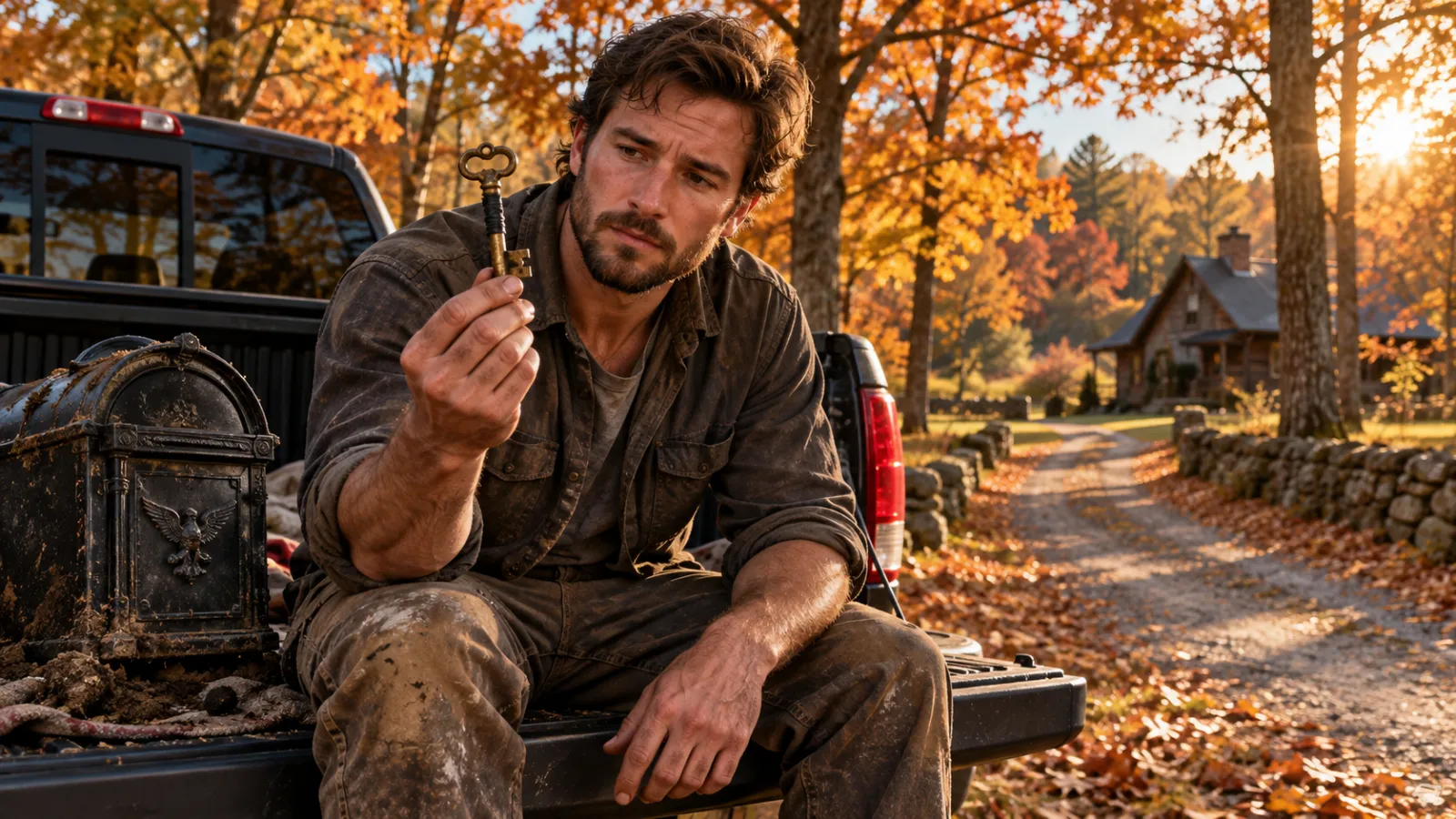
When older brother Raymond auctions Grandpa Arthur's house and leaves Lucas only a heavy cast-iron mailbox as scrap iron, he thinks he won. Restoring the metal in his workshop, Lucas finds an antique brass key and an irrevocable deed to a hidden fifteen-acre lakefront cedar lodge.
Chapter 5: Cedar Beams and an Irrevocable Deed
The crushed-shale lane wound down through the cedar grove for three hundred yards before emerging into a private, sunlit cove. The sight that opened before me took my breath away.
Fifty yards from the gravel shoreline of Black Fork Lake, perched on a elevated plateau of hand-laid native sandstone piers, stood a magnificent two-story timber lodge.
As a custom carpenter who has spent his entire adult life measuring grain orientation and mortise depths, I stood frozen in pure admiration. This was not a rustic hunting shack. It was a structural masterpiece of traditional timber framing, built from sixteen-inch hand-hewn western red cedar logs and cured white oak tie-beams.
The front elevation featured an eight-foot wrap-around porch supported by turned cedar posts with chamfered brackets. The roof was pitched steep to shed heavy lake-effect snow, covered in thick split-cedar shakes that had weathered to a dignified pewter gray. In the center of the lodge rose a massive fieldstone chimney, twenty-six feet high, laid with river stones fitted together so tightly that barely a trace of mortar showed between the joints.
Every corner of the structure was joined with traditional compound dovetails. Where the heavy porch rafters met the main wall, Arthur had driven two-inch octagonal white oak trunnels, each pin flush and sealed with beeswax.
I walked up the wide stone stairs to the front porch. The deck boards were three-inch-thick quarter-sawn white oak, completely level, without a hint of bounce under my work boots.
On the front door hung a solid bronze thumb-latch assembly, salvaged from an old passenger depot. A secondary, smaller brass key hung from the ring Arthur had left in the envelope. I slipped it into the cylinder and turned it. With a soft click, the heavy oak door swung inward.
The interior smelled wonderful. It was a clean, timeless fragrance of aged cedar resin, beeswax, dried lavender, and cured sandstone.
The great room opened upward into a soaring cathedral ceiling that rose twenty-four feet to the ridge beam. Overhead, massive hammer-beam trusses spanned the thirty-foot width of the room without a single steel tie-rod, proving the sheer perfection of pure engineering mathematics. Large casement windows along the lakeside wall flooded the room with soft morning light, framing a panoramic view of the misty water and forested islands.
In the center of the room stood a handcrafted ten-foot trestle dining table made from book-matched black walnut slabs, four inches thick. Along the perimeter walls sat custom built-in walnut bookcases filled with Arthur's collection of railway engineering treatises, mechanical drafting manuals, and Ohio local histories.
Resting in the center of the walnut table was a heavy, zippered leather legal portfolio, tied with a braided green silk cord.
I unzipped the portfolio and laid out the legal documents across the smooth walnut surface.
The first document was a certified copy of the original 1982 warranty deed for the fifteen-point-six-acre parcel, surveyed and recorded in the Ashland County deed book. Attached to it was an official title insurance certificate and a sheaf of county tax receipts, showing that property taxes had been paid twenty years in advance through a dedicated escrow account funded by Arthur's railway patent royalties.
Beneath the receipts lay the founding charter of the Arthur Vance Irrevocable Heritage Trust, prepared by attorney Evelyn Ward in Loudonville.
The legal language was unyielding. The trust was established as a spendthrift trust, completely shielded from any estate claims, creditors, or probate challenges. Lucas Vance was designated as sole successor trustee and sole equitable beneficiary upon the presentation of the physical accession key. The deed was legally immune to probate partition, and any challenge filed by an excluded heir carried an automatic penalty clause that stripped them of any remaining estate assets.
The property had been independently appraised five years ago at two point two million dollars, largely due to its eight hundred feet of protected deep-water frontage.
I sat in one of the hand-carved walnut armchairs, looking out through the tall glass windows at the water. Arthur had spent twenty-two years building this sanctuary with his own hands, shielding it with legal steel so that no opportunistic speculator could ever tear it down.
Suddenly, the harsh buzzing of my cell phone broke the stillness.
I pulled the phone from my pocket. It had picked up a faint signal from a cell tower across the lake. The screen was lit up with seven missed calls and a flood of frantic text messages from my brother Raymond.
Where the hell are you? the messages read. A title clerk at the county recorder just flagged an active land trust under Arthur's name at Black Fork Lake. There's a 15-acre commercial parcel tied to your name. Did you forge grandfather's papers? I have an appraiser with me in my car and we are heading north right now. You answer your phone or I call the county sheriff.
I looked at the furious messages on the glowing screen, then looked up at the quiet grandeur of Arthur's cedar beams.
My hands were completely steady. I walked to the kitchen counter, found a box of wooden strike-anywhere matches inside an iron crock, and walked toward the fieldstone hearth.
End of chapter 5