Revenge4 min read
The CEO’s Stolen Idea
When narcissistic CEO Vance fires chief architect Julian and steals his breakthrough logistics engine for a $100M Series C pitch, he forgets one detail. The core algorithm requires Julian's cryptographic key, which triggers an immutable copyright proof on the live auditorium screen.
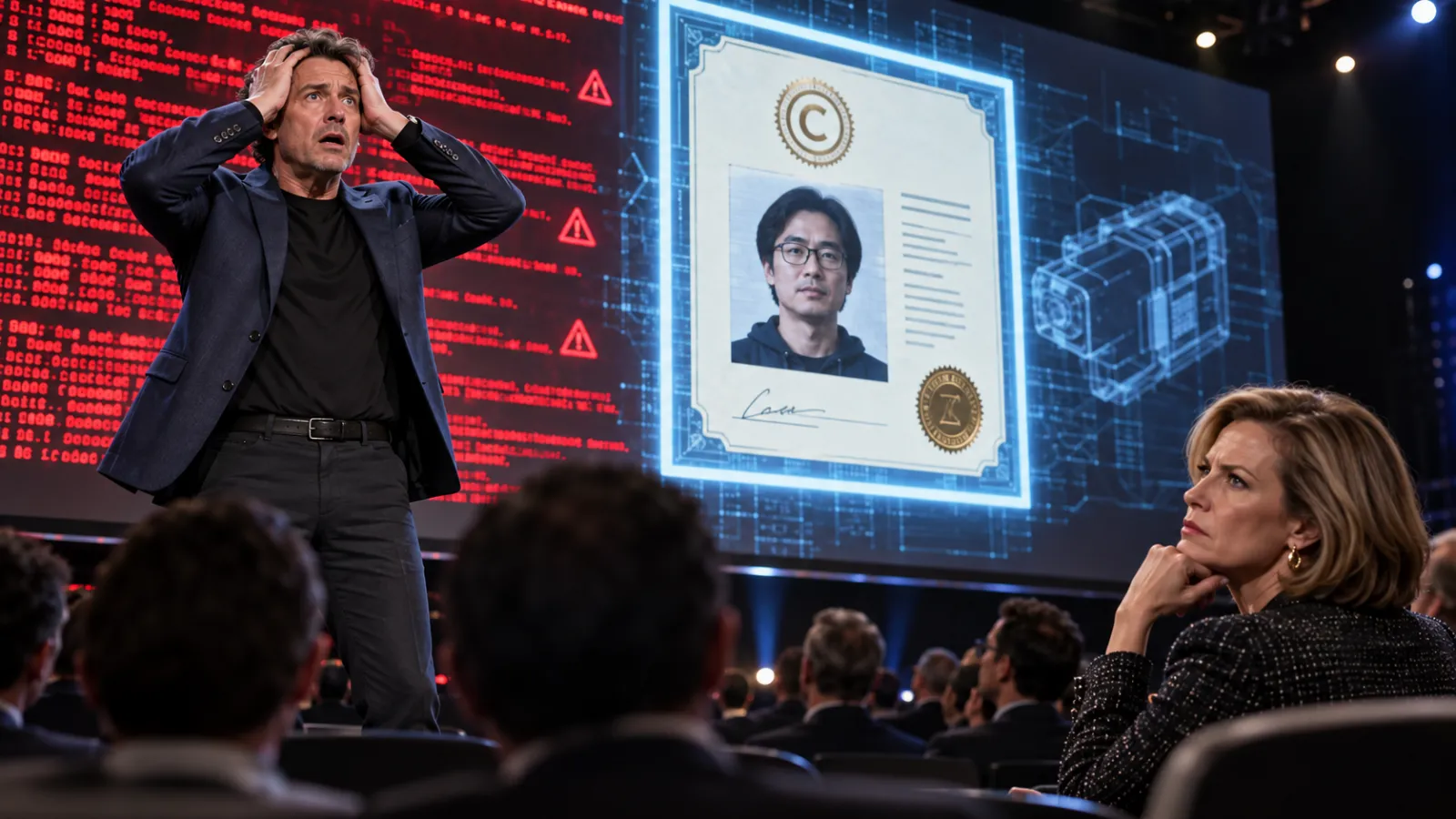
Chapter 2: Fired Before the Keynote
On Wednesday afternoon at three o'clock, exactly forty-eight hours before the Fairmont Grand keynote, my desk phone buzzed with an urgent summons. The caller was Karen Hayes, our head of human resources. She asked me to join her in Conference Room C on the eastern side of the executive floor.
When I entered the glass conference room, Vance was already seated at the head of the polished quartz table. Karen sat beside him, her hands folded over two thick manila folders. Behind them, standing with their hands clasped in front of their belts, were two uniformed private security officers from building management.
"Julian, please sit," Vance said, his voice flat and clinical. The theatrical charm he displayed for reporters had vanished, replaced by the cold posture of a corporate executioner.
I pulled out a chair and sat down, resting my hands on the table. "What is this about, Vance?"
"As NexaLogistics prepares to enter our institutional growth phase with Apex Global Capital, we must align our culture with executive leadership," Vance said, reading from a typed memorandum. "Your hostile questioning of my authorship yesterday demonstrated an unacceptable resistance to corporate governance. We cannot tolerate internal friction during an investment round of this magnitude."
Karen opened the first folder and slid a single-spaced separation agreement toward me. "Your employment with NexaLogistics is terminated immediately for cause, Julian. Effective at three-fifteen this afternoon."
I looked down at the document. The terms were aggressive and punitive. There was zero severance pay. My unvested stock options, accumulated across twenty-four months of development and worth roughly eight million dollars under the proposed Series C valuation, were wiped clean. The contract also included a comprehensive non-compete restriction barring me from working in logistics software for twenty-four months.
"Terminated for cause?" I asked, looking Karen directly in the eyes. "I delivered the core routing architecture three weeks ahead of schedule. We passed all staging benchmarks with zero critical defects. What cause are you citing?"
"Insubordination and disruption of executive duties," Karen replied without blinking. "You contested company ownership of core technical assets. Under your initial offer letter, company intellectual property belongs exclusively to the corporate entity."
"The offer letter states company property belongs to the entity," I said calmly. "It does not allow the chief executive officer to put his personal name on an individual patent application as sole inventor."
Vance leaned forward, tapping his manicured index finger against the quartz surface. "That is corporate business, Julian, and it is far above your pay grade. You are a contractor at will who was well compensated to write code. You do not dictate patent filings to the founder."
Karen produced a blue ballpoint pen and set it beside the paperwork. "If you sign the separation agreement and the accompanying intellectual property waiver, the company will grant you two weeks of health coverage continuation. If you refuse, we will withhold all final accrued vacation disbursements and enforce every legal covenant."
I turned the pages slowly, reading the fine print. Paragraph seven contained a broad intellectual property release, asserting that the employee forfeited any and all prior claims, provisional patent filings, and personal algorithmic components developed prior to or during employment.
I picked up my own black ink fountain pen from my shirt pocket. I turned to the equipment return schedule, signed my name acknowledging the surrender of the company-issued laptop, and drew a deliberate black line through paragraph seven and the IP surrender clause.
"I acknowledge returning the company laptop and security passcard," I said, setting my pen back into my pocket. "I will not sign an intellectual property release, and I will not waive my statutory rights."
Vance let out a dry, dismissive laugh. "Do you honestly think your signature matters, Julian? We pulled the latest production build from the repository at noon. Our devops team already deployed the release container to our production clusters. We have the source code, we have the staging pipelines, and on Friday morning, I have the stage at the Fairmont."
He gestured to the two security guards standing by the frosted glass door. "Officers, please escort Mr. Mercer to his desk. He has ten minutes to collect his personal items and vacate the premises."
The walk across the twenty-fourth floor was dead quiet. The engineering bullpen, usually filled with the rhythmic clicking of keyboards and technical banter, went completely silent as the guards walked on either side of me. At the third row of standing desks, Marcus Torres looked up from his dual monitors.
Marcus's eyes widened when he saw the security guards flanking me. He started to rise from his chair, his jaw clenched in anger, but I met his gaze and gave him a calm, imperceptible shake of my head. He hesitated, then slowly sank back into his seat, watching my every movement.
At my desk, I packed my personal satchel with deliberate care. I took my leather-bound engineering notebook, my reference textbooks on graph theory, and my spare fountain pen. Finally, I reached beneath the desk monitor and picked up a small black metal keychain with a gold contact ring.
It was my personal YubiKey hardware security token, stamped with a tiny laser-etched serial number: YK-9042-JM.
I slipped the hardware token into my front pocket, zipped my satchel, and turned to the security guards.
"I am ready," I said.
They escorted me to the express elevator and rode down to the ground floor lobby in silence. As the brass elevator doors parted onto the marble floor of Montgomery Street, one guard retrieved my visitor badge and turned back toward the turnstiles.
I stepped through the revolving glass doors into the brisk October breeze. High above, the glass windows of the penthouse suite reflected the pale afternoon sky. Vance believed he held the entire machine in his hands because he controlled the server room. He was about to discover what happens when an engine meets reality without its key.
End of chapter 2