Revenge4 min read
The CEO’s Stolen Idea
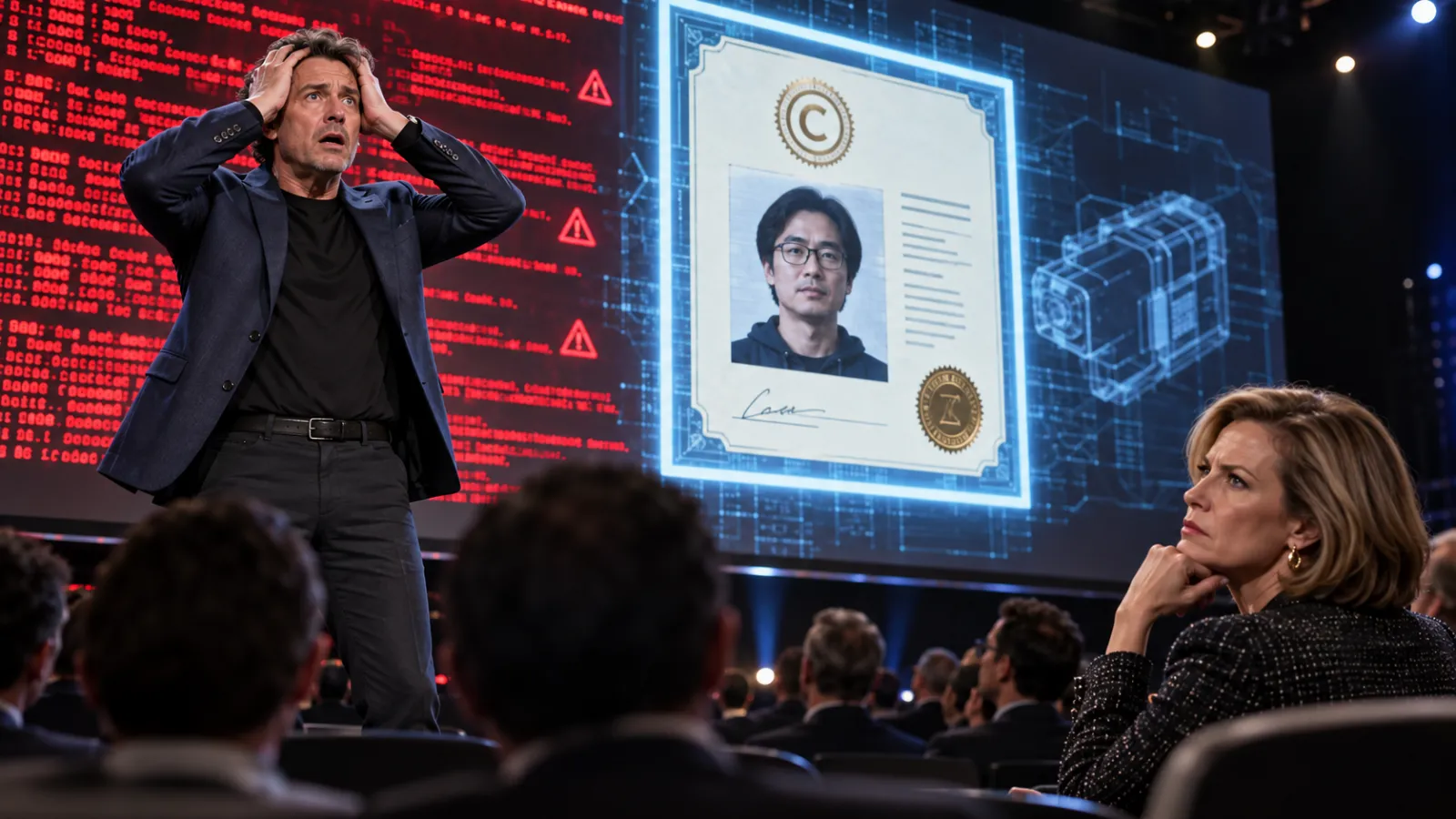
When narcissistic CEO Vance fires chief architect Julian and steals his breakthrough logistics engine for a $100M Series C pitch, he forgets one detail. The core algorithm requires Julian's cryptographic key, which triggers an immutable copyright proof on the live auditorium screen.
Chapter 6: Acquisition at Market Close
Evelyn Cross held the wireless microphone with steady fingers. Her voice cut across the ballroom with the force of an iron gate slamming shut.
"Mr. Sterling," Evelyn said, looking up at the pale man on stage. "Apex Global Capital does not invest in stolen property. More importantly, our investment committee does not tolerate fraudulent misrepresentation."
Vance gripped the podium, his knuckles white. "Evelyn, please. This is a misunderstanding. A junior engineer left a signature block in the test code before he was discharged for misconduct. We can resolve this in private counsel."
"I am an MIT aerospace graduate, Mr. Sterling," Evelyn replied, her tone razor-sharp. "I can read a cryptographic patent disclosure. That is not a test block. That is an immutable zero-knowledge gate bound to a federal patent application filed six months ago. As of this exact second, Apex Global Capital is formally rescinding our hundred-million-dollar Series C term sheet."
A collective gasp swept through the five hundred attendees.
"Furthermore," Evelyn added, turning toward the media row, "our legal counsel will be notifying the NexaLogistics board of directors and the Securities and Exchange Commission regarding the fraudulent authorship claims presented in your prospectus."
Vance stared at her, his jaw trembling. He dropped his wireless microphone onto the stage floor, producing a deafening electronic thud that resonated through the line-array speakers. He turned and fled through the velvet stage curtains into the backstage corridor.
I stood up quietly, buttoned my charcoal wool coat, and slipped through the rear exit doors into the Fairmont lobby.
By one o'clock that afternoon, the disaster was leading the business section of every major financial network. Bloomberg ran the headline: NexaLogistics Keynote Implodes Over Stolen Algorithm. TechCrunch published high-resolution photographs of the forty-foot screen, detailing the federal patent application under my name.
At two-fifteen, my personal cell phone buzzed. It was Marcus.
"Julian, turn on the news," Marcus said, his voice breathless with excitement. "The board of directors called an emergency meeting forty minutes ago. Vance locked himself in his penthouse office, but security escorted him down to the street ten minutes ago. He was fired for cause. Zero equity acceleration, zero golden parachute, and the company is preparing a lawsuit to claw back his bonus."
"What about the engineering team?" I asked.
"All twenty of us packed our desks," Marcus said. "We told the interim board chairman that we will not write a single line of code without our chief architect. We are sitting in the coffee shop across from Montgomery Street right now, waiting for your call."
At four o'clock, fifteen minutes before market close, I sat at a marble table in the quiet garden lounge of the Fairmont Hotel. The autumn afternoon light filtered through the arched leaded windows, casting warm amber squares across the carpet.
A pair of polished leather heels clicked across the marble floor. Evelyn Cross approached my table, carrying a slim leather folder.
"Mind if I join you, Mr. Mercer?" she asked.
"Please, Ms. Cross," I said, gesturing to the armchair opposite mine.
She sat down, ordered sparkling water from a passing waiter, and set her folder on the marble table. "My technical diligence team spent the last three hours verifying the USPTO database and the Library of Congress repository. Your provisional patent filing from April is mathematically airtight. You solved the distributed multi-agent routing problem that IBM and Oracle have been chasing for a decade."
"I spent two years building it," I said. "Vance believed that because Nexa owned the server racks, he owned my brain."
"Vance Sterling is a marketing salesman who confused charisma with competence," Evelyn said, opening her folder to reveal a crisp, three-page term sheet. "Apex Global Capital does not want NexaLogistics. We want the architecture, and we want the architect who built it."
She turned the document toward me. "Here is our offer. Fifteen million dollars in direct Series A funding to establish Mercer Systems as an independent enterprise. You retain sixty percent founder equity, complete voting control of the board, and an immediate three-million-dollar hiring pool to bring your core engineering team with you."
I looked down at the term sheet. The valuation was fair, the governance protections were clean, and the legal covenants recognized my sole intellectual ownership of Prism.
"Marcus Torres and six senior systems engineers are waiting for my call on Montgomery Street," I said.
"Bring all twenty of them," Evelyn said with a rare, genuine smile. "We will wire the initial deposit to your corporate escrow account on Monday morning."
I pulled my black ink fountain pen from my coat pocket and signed my name on the final line of the agreement.
We shook hands, and I walked out through the Fairmont's brass revolving doors onto the crest of Nob Hill. On the granite steps below, Vance was loading two cardboard boxes into the trunk of a yellow taxi, his designer blazer rumpled, looking up in despair as his corporate credit card was handed back by the driver.
I tightened my coat against the brisk ocean wind and began walking down California Street toward the bay. The late afternoon sun turned the San Francisco skyline to gold. For two years, I had labored in the shadows of an arrogant man's ambition. Now, the city belonged to the builders, and my life was entirely my own.
The end