Family6 min read
You Have Until Eleven
I'd been patient for six months. The morning she told me I'd be moving into the guest room, I carried her suitcases to the porch and locked my own front door.

Chapter 4: What I Kept
For several days after Nolan's visit I left the document in the drawer where I had put it the morning I found it on the kitchen table.
I had not decided what to do with it. I was not going to use it in any legal sense — not as evidence, not as leverage, not as the anchor of a grievance I carried into the next decade. It was paper. It described an intention that had not been executed, a future that had not happened. Tessa had drafted it and left it on the table and then, as far as I could tell from two days of silence between us, never mentioned it again. Maybe she had changed her mind. Maybe she had been waiting for the right moment and the right moment had never come and then I had removed the situation before she could act on it. I did not know which version was true. I was not going to know.
What I knew was that keeping it felt like keeping a grievance in a drawer, and I was done keeping things in that drawer.
I called Perry on a Tuesday.
She came over that afternoon with a late tomato from a plant she had managed to keep alive in a pot on her kitchen windowsill — small and deeply red and slightly soft at the shoulder, the kind of tomato that is better than it has any right to be in November. She set it on the counter beside the sink and looked around the kitchen with the particular attention she brings to rooms she has visited many times and is now assessing for change. She noted, without comment, that Tessa's canvas was gone from the wall beside the kitchen doorway. The county fair ribbon was back in its place.
She asked how I was doing. I said I was fine. She said: no, how are you doing.
I told her. Not in the right order, and not all of it, but enough — the pantry and the frames and the Sunday morning with Imogen's candle and the document I had found on Thursday and the two days I had sat with it before I acted. She listened without filling the silences. She did not say anything sympathetic until I was finished, which was the right call and the reason I had called her.
When I finished she was quiet for a moment. Then she said she thought I had done the right thing. She said it the way she says everything: flat, as an assessment, without decoration. Perry does not offer opinions to make you feel better. When she says she thinks you did the right thing, she means she has measured it against what she knows and arrived at that conclusion, and you can take it to the bank.
I asked her if she thought Nolan would be all right.
She said she thought Nolan had some deciding to do, and that nobody could do it for him, and that him showing up with no Tessa and eating the soup was a reasonable indication of where the deciding was heading.
I said I thought so too.
She stayed for an hour and drank most of my good coffee and told me about a fence-line dispute with a neighbor that had been escalating for three weeks and now involved a surveyor. I was not involved in this dispute and had no stake in its outcome, but it was diverting, and diverted was what I needed.
When she left she said to call her when the last tomato came in next year, meaning she would be here. I said I would.
That evening I took the document out of the drawer.
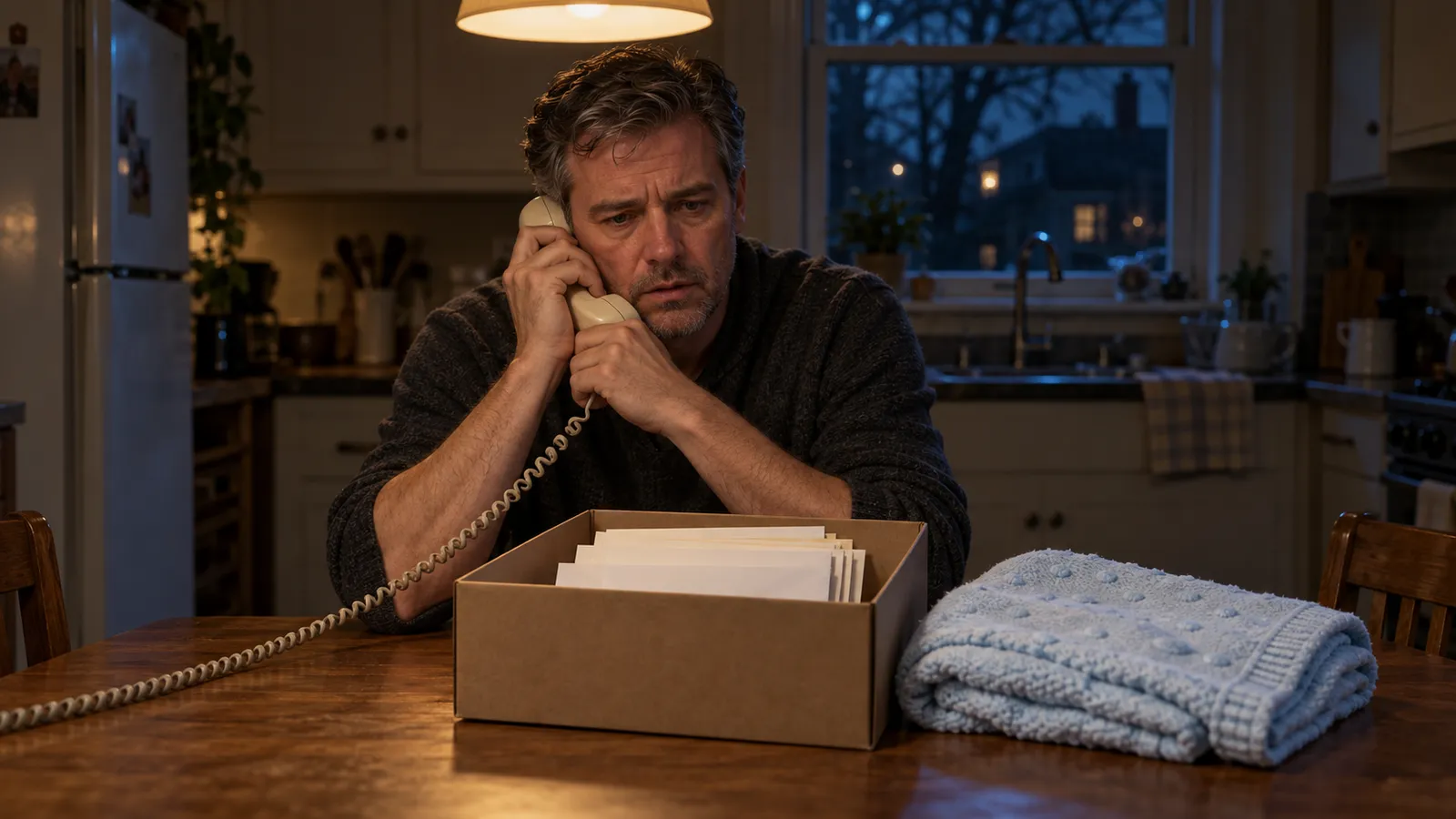
I sat with it at the kitchen table under the good light — the one I have had since 2019, that I bought after my husband died because the original light was too dim for reading and he was not going to argue about it anymore. The document was four pages. Tessa's name on the front page, Nolan's name, my name at the signature line. And on the margin of the first page, in Tessa's handwriting, a bracket and a question mark around the third paragraph — the one that described the eldercare provisions and what they would transfer.
That bracket and that question mark were what I had been thinking about all week. She had been uncertain about that paragraph. She had flagged it for herself, which meant she had read it and not been entirely satisfied with what it was asking for. That did not make it better exactly, but it made it more human. She was not a person who had arrived in my house with a finished plan; she was a person who had found herself in a situation and reached for tools she thought were appropriate and had not been certain they were.
I found an envelope in the second drawer. I folded the pages and put them inside. I wrote Tessa's name on the front — not Tessa Harding, just Tessa, the way I would address a neighbor. I wrote the new apartment address that Nolan had texted me from the building on Carver Street. No note inside. I sealed the envelope and put a stamp on it and set it on the counter where I leave things that are leaving the house.
In the morning I walked it to the box at the corner of Whitmore and Drury and dropped it in without stopping to think about it further.
I did not feel triumphant. I did not feel forgiving. I felt the specific lightness of a drawer that no longer has something in it that does not belong there.
The geraniums on the porch had been waiting since October. I had meant to cut them back for weeks, and the longer I had put it off, the worse they looked — the finished blooms brown and papery, pulling the stems down, exhausting the plant by holding onto what was over. I got the scissors from the kitchen drawer and went out that afternoon in my coat.
I cut each spent stem back to the first live leaf. The pile of clippings grew on the porch boards beside my feet. When I was done the plants looked spare and intentional, the way things look after a necessary reduction. They would come back in spring. They always did, if you cut them back at the right time and did not leave them holding on past the point where holding on did them any good.
I swept the clippings off the porch and went inside.
I made tea. I sat in my reading chair with a library book I had been meaning to finish for two weeks. The light through the front window was the flat gray of mid-November, and through the glass I could see the trimmed geraniums at the railing, small and spare against the afternoon.
I turned the first page. I read for two hours before the light went.
In the evening I turned on the porch light, because it was dark and the porch light goes on when it gets dark. I stood at the door for a moment and looked out at Whitmore Lane — the neighbor's maple with its last yellow leaves, the still cars in the driveways, the quiet particular to a Sunday in November when the week has not yet started.
I wrote the last entry in the appointment book for the month: Nov — Mailed the document. Cut back the geraniums.
Then I closed the book and went to see about dinner.
The end