Family4 min read
My Brother Put a Price Tag on Mom’s Kitchen Table
Six weeks after Mom’s death, I came home to help clear her rented house. My brother had already sold her kitchen table, and the buyer was at the door.
Chapter 5: Two Signatures
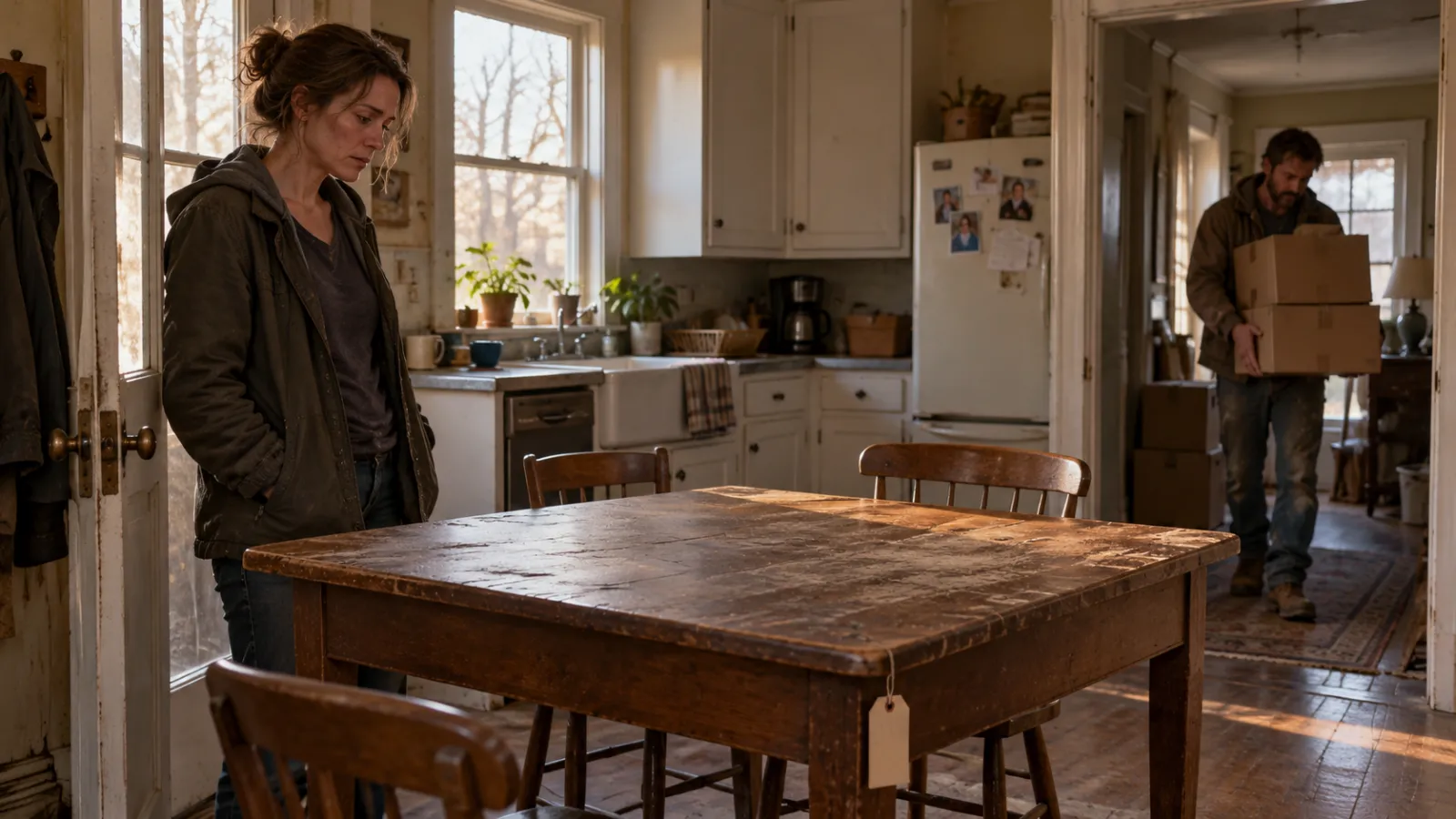
On Sunday, we used a folding card table for the paperwork. Mom's kitchen table stood upright again, but Owen wanted the repair left alone until morning.
He opened the attorney's email on his phone. I put the printed copy between us, with yesterday's list of missing records beside it.
The message was careful. Proof that Owen had paid something did not decide whether the estate owed him. Claims needed proper submission and review. Some items might not qualify; even allowed claims depended on estate funds and priority. We weren't to distribute money simply because we agreed an expense was fair.
It was less satisfying than finding somebody to blame.
“So,” I said, “we don't just subtract your total from her account.”
“No.”
“And we don't call it all medical.”
“Please don't.”
I wrote classification pending above the care worksheet. We separated the agency invoices from groceries and supplies, then marked mixed receipts for closer review. The tire stayed outside the proposed expense packet. Owen said it was his tire, on his car, whatever errands he'd used the car for.
The two faded receipts weren't part of the supported sixty-four eighty. His penciled notes about them went in the missing-records list, not into a total.
“What about the time they docked?” I asked.
“No lost wages in this,” he said.
I drew a line through the empty space where I might have added them. There was no sensible way to turn the night he'd described into a tidy expense entry.
We worked through Mom's final utility statement and the small bank balance. Owen had copies of the papers he'd filed to handle the estate, but questions remained. We put the sale envelope beside that folder. The forty dollars wasn't his to use against his card bill. Neither was any deposit the landlord returned.
When the piles were separated, the card statement sat alone.
“I want to help with that,” I said.
He leaned back. “How much of that do you think is yours?”
“Legally? I'm not saying any of it is.”
“Then what are you saying?”
I had looked at my own numbers that morning. Rent, utilities, groceries, savings I couldn't responsibly empty. I had wanted to arrive with an amount big enough to make the conversation end. My budget refused to cooperate.
“Three hundred a month,” I said. “For twelve months. Thirty-six hundred total.”
Owen looked at the separate piles. “You picked half?”
“No. It's what I can keep doing. It isn't half the care costs or half the card. I don't want to give you another promise that depends on everything going right.”
“I didn't ask you for a loan.”
“I'm not asking you to pay me back.”
“Charity, then.”
I folded my hands under the table so I couldn't start straightening his papers.
“I sent money and let myself think you were fine. I can't fix the nights. I can take some pressure off now, if you'll let me.”
He rubbed the edge of the card statement against the tabletop. “You don't get to say we're even after.”
“I won't.”
“You don't get the table.”
“I know.”
He studied me long enough that I stopped adding arguments. At last he asked, “What if something happens at your job?”
“Then I tell you before the payment's due. We talk. I don't disappear.”
We wrote that down in ordinary words. A personal agreement between us, paid from my own earnings, separate from the estate. We also wrote that any later estate reimbursement for the same costs would be accounted for, with the remaining personal payments adjusted so there wasn't a double recovery.
The wording wasn't a substitute for the attorney's advice. We added it to our questions for the next appointment rather than pretending two signatures could settle the estate.
Owen read the page twice. He corrected the payment date because my payday fell after the date I'd first chosen.
“That would've been a great start,” he said.
I laughed, tired enough to laugh at myself. “Already asking for an extension.”
He didn't smile much, but he passed me the pen.
I signed Rachel and my last name. Underneath, he signed Owen and the same last name. I had filled out forms beside him before, at the hospital and after the funeral. This was the first one on which we had chosen the terms rather than been told where to write.
I scheduled the first transfer while he watched. Three hundred dollars. It did not alter the bank balance in Mom's estate folder. It did not alter the receipt in Denise's pocket.
Owen checked his phone when the confirmation arrived.
“Got it,” he said.
That was all. I found I could bear that better than a thank-you I had persuaded him to give.
We photographed the agreement and each kept a copy. Then we prepared a separate handoff sheet for Monday: table price paid, leg repaired, delivery included at no further charge. Owen and I initialed our responsibility for the repair. Denise would check the table and acknowledge delivery herself.
I asked if we should mention the burn on the top.
“She saw it,” he said.
“I made that burn.”
He looked up. “You what?”
“The pan. Mom always said you did it, but it was me.”
“She knew,” he said.
“How do you know?”
“She told me once. Said you looked so scared she forgot to yell.”
I could not verify his memory, but I recognized the look Mom had given me across the table for years. I set the pen down.
Owen sent Denise a message confirming nine the next morning. She answered that the van would be there.
We cleared the card table. For once, each sheet went into the folder it actually belonged in.
End of chapter 5