Mystery5 min read
Seat 14B Was Always Empty
A transit manager sent to shut down a failing commuter line finds one rider who has bought two tickets for the same early train for nine years. He assumes fraud. The answer is in a nine-year-old memo signed by his own boss.
Chapter 5: Fourteen B
The board met at two in a room on the fourth floor with eleven chairs and a carafe of coffee nobody drank.
My item was seventh. I sat through a fire-panel contract, a bus-shelter easement, and eleven minutes of discussion about whether the authority's logo should appear on the new fare machines in blue or in gray.
Then the chair said, "Vale Line service package," and I stood up.
I did not tell them about Adele Whitaker. She had not given me permission to put her son in a public minute, and a board does not need a dead man to understand a cost sheet. I told them about the cell.
I told them the attributed station-opening cost had been charged entirely to the first scheduled departure since at least 2017, that the same template had produced the 2017 discontinuance of the 5:40, and that the number in front of them overstated the saving from killing the 6:10 by seventy-one thousand four hundred dollars. I said that I had written the original version of that page myself on Monday and had not caught it, and that nobody should adopt a recommendation whose arithmetic I could not defend in public.
A board member named Hal, who runs a tire business out on Route 9 and who has asked me one question a year for nine years, asked the right one.
"So what do you want us to cut instead?"
"The eleven twenty and the one fifty off the midday," I said. "And the operations manager post at Ridge Street."
"Whose post is that?"
"Mine."
Nobody said anything for a few seconds. Lorraine Thorne, who had read the package twice and marked it in green and said nothing to me in the elevator, said, "Planning concurs with the revised package."
Two people spoke in the public comment period. A woman named Rosalie, who has used the 11:20 every Wednesday for six years to get to a clinic in the city, said that we were taking the only train that fit between her husband's dialysis and the end of school, and she said it with her name and address read into the minutes. A man who did not give his last name said the one fifty was how he got to his shift and that he would now be leaving an hour and forty minutes early.
They were right. I had put them there. The board voted anyway, five to two, and the chair thanked me for the correction.
That is the whole of it. There was no applause. The fire-panel contract took longer.
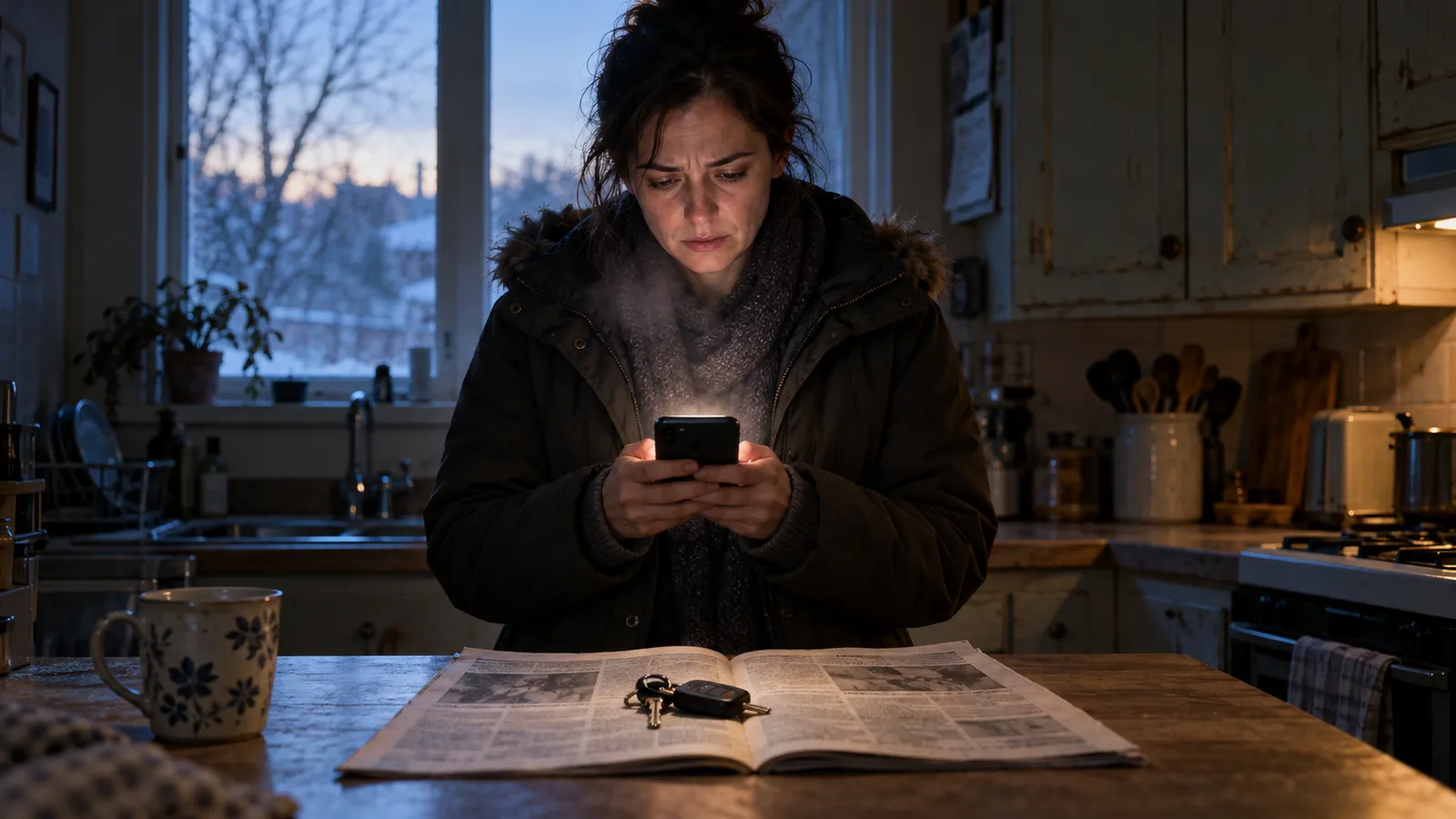
I told Dana that night at the kitchen table, with the numbers written out, because that is how she and I have always done the hard ones.
Depot supervisor. Thirty-one thousand dollars less. No regional planning job in March; they gave it to a man from the bus division who will sign what he is handed, and he will be good at it.
She was angry for two days. Not shouting. Dana does not shout; she goes quiet and efficient and does the laundry at eleven at night. On the second evening she put a legal pad on the table and went through it out loud: the deck we were not building now, the second car we would run another four years, three more years before she could stop working, and whether her sister would need to be asked for anything, which was the part that actually cost her.
"Did you have to be the one?" she said.
"I wrote the page."
"That's not an answer. Lots of people wrote that page."
"Then I'm the one who read it after."
She looked at the pad for a while. Then she drew a line under the column and said, "All right. But we are not doing this again at fifty-eight," and she took the pad with her when she went to bed, which is how I knew it was finished.
I have not told her the whole of it even now. She knows about a woman who buys two tickets. She does not know that I filed a referral that froze that woman's card, and I have not found a way to say that out loud yet that does not sound like a man asking to be forgiven.
The Vale Line schedule for January went up on the website in the second week of November. The 6:10 is in it. The 11:20 and the 1:50 are not.
Gus found me in the yard the morning it posted. He did not say anything about the board or the job. He handed me a work order, closed, signed, block capitals.
CAR 2 SEAT 14B — RETAIN — DO NOT SCRAP — NO EXPIRY.
"Put it in your file now," he said. "Not mine. I'm seventy-one."
I start at the depot on the first Monday in December. In the meantime I have been riding the 6:10 in, because the depot supervisor's office is at Ridge Street and Ridge Street is on the line, and because I have been counting boardings by hand at North Vale Terminal for three weeks for a corridor report nobody asked me for.
Twenty-four this morning. Twenty-six on Tuesday. The automatic counters said twenty-one and twenty-two, which is the eleven percent they always lose in the cold.
She taps twice. She still taps twice.
On the third Monday in November I came down the platform with the tally counter in my left hand and the ticket I had bought for myself in my right, and I stopped at row fourteen on the right-hand side because there was nowhere else on that car I wanted to sit.
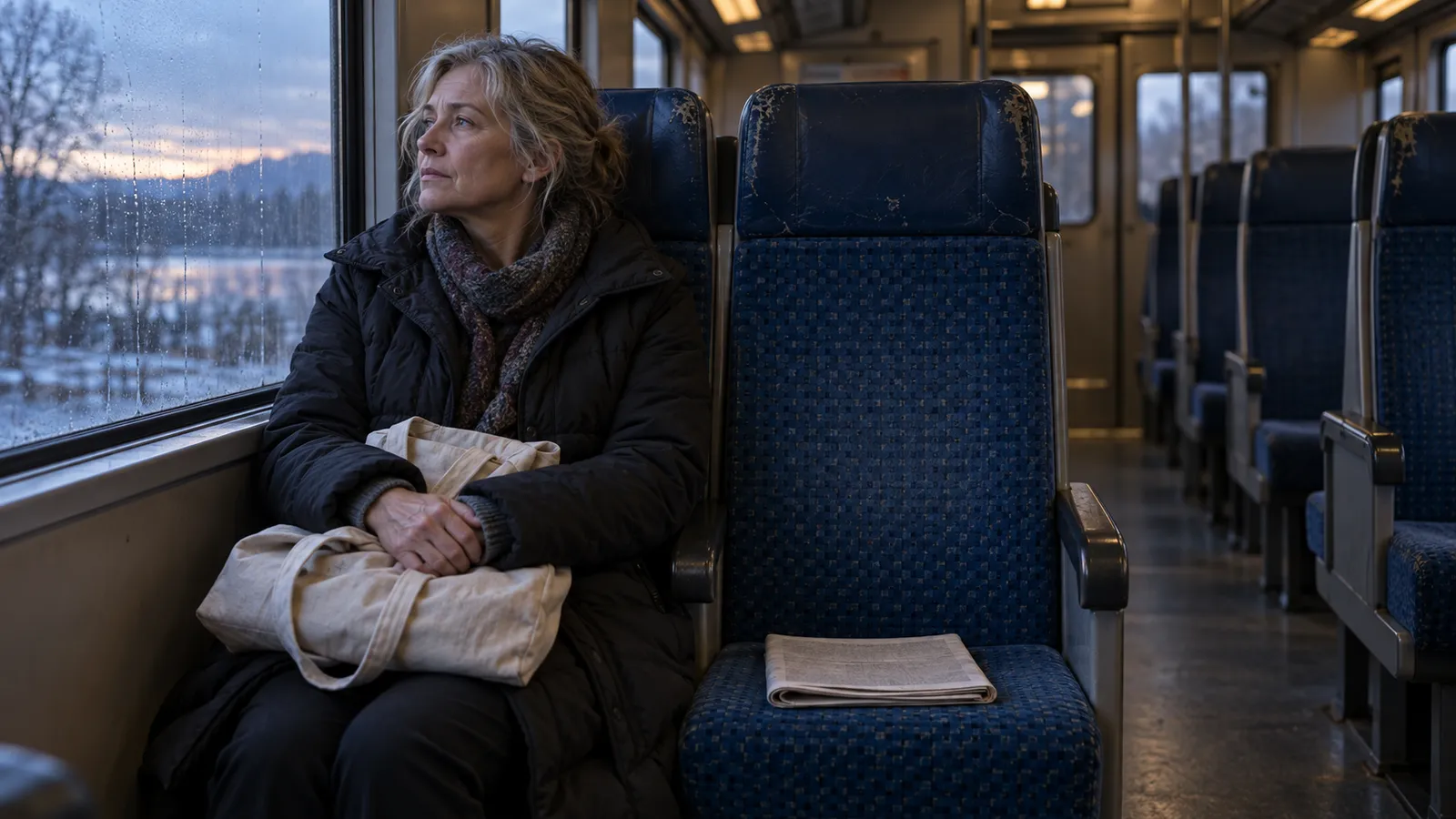
Adele Whitaker looked up at me. The folded paper was on 14B, printed side down, squared to the edge of the seat.
She did not say anything about the board, or the schedule, or the job. I do not think she knew about the job then, and I did not tell her.
She looked at me for a long moment, the way you look at a form before you sign it.
Then she picked up the newspaper, folded it once more, put it in her tote, and moved her knees to let me by.
I sat down in 14B. The heater pipe runs under the window side, so the warm seat is hers. Mine was cold the whole way in, and that was correct.
Neither of us said a word for thirty-one miles. At Ardmore Street she stood and said, "Mr. Hensley," the way you say good morning, and went up the steps to the laundry.
I clicked the counter once for myself, which is not how a count is supposed to work.
Two fares. For the first time in nine years, two passengers.
The end