Mystery6 min read
The Obituary That Ran a Week Early
My mother's obituary ran a week before she died. No funeral home placed it, it was paid in cash weeks early, and it ended with a sentence only she and I ever used. I traced who filed it — and found the answer was a question she had run out of other ways to ask.
Chapter 7: Leave the Porch Light On
The house was cold because Dale had turned the thermostat down to fifty-five, which was sensible and which I resented for a full minute before letting it go.
I opened the drawer under the telephone.
The green steno pad was on top of a folder of her papers, and I sat on the floor with my back against the little table, the way I had sat on my kitchen floor in Ashfield twenty days before, and read my mother's handwriting from the first page forward.
There were seven drafts.
The first ran nearly two pages: the church she quit in 2009, her parents, the county, my father's service years, the year she started at the schools and the year she finished, Dale and his wife and their boys by name, me, a line about a quilting circle. It read like a woman taking inventory to see whether a life came to anything.
The second was shorter. The quilting circle was gone.
By the fourth, the church was gone and her parents were one clause. She had written and her daughter, Nora, of Ashfield, then struck out of Ashfield and written Jean above the line. She had decided not to print the name of a town I moved to without telling her, and printed instead the name she used to call up the stairs.
The porch light sentence was in the first draft. It was struck out in the second. It was back in the third, struck out again in the fourth and fifth, and in the sixth it was written at the bottom, circled, with three words beside the circle: too much? leave it.
In the seventh it was there, plain, with no mark on it at all.
The seventh draft was eleven lines long and it is word for word what ran in the paper on the tenth of March.
She had cut everything out of her own death that could be mistaken for a boast, and kept the one line that only one person on earth would read correctly.
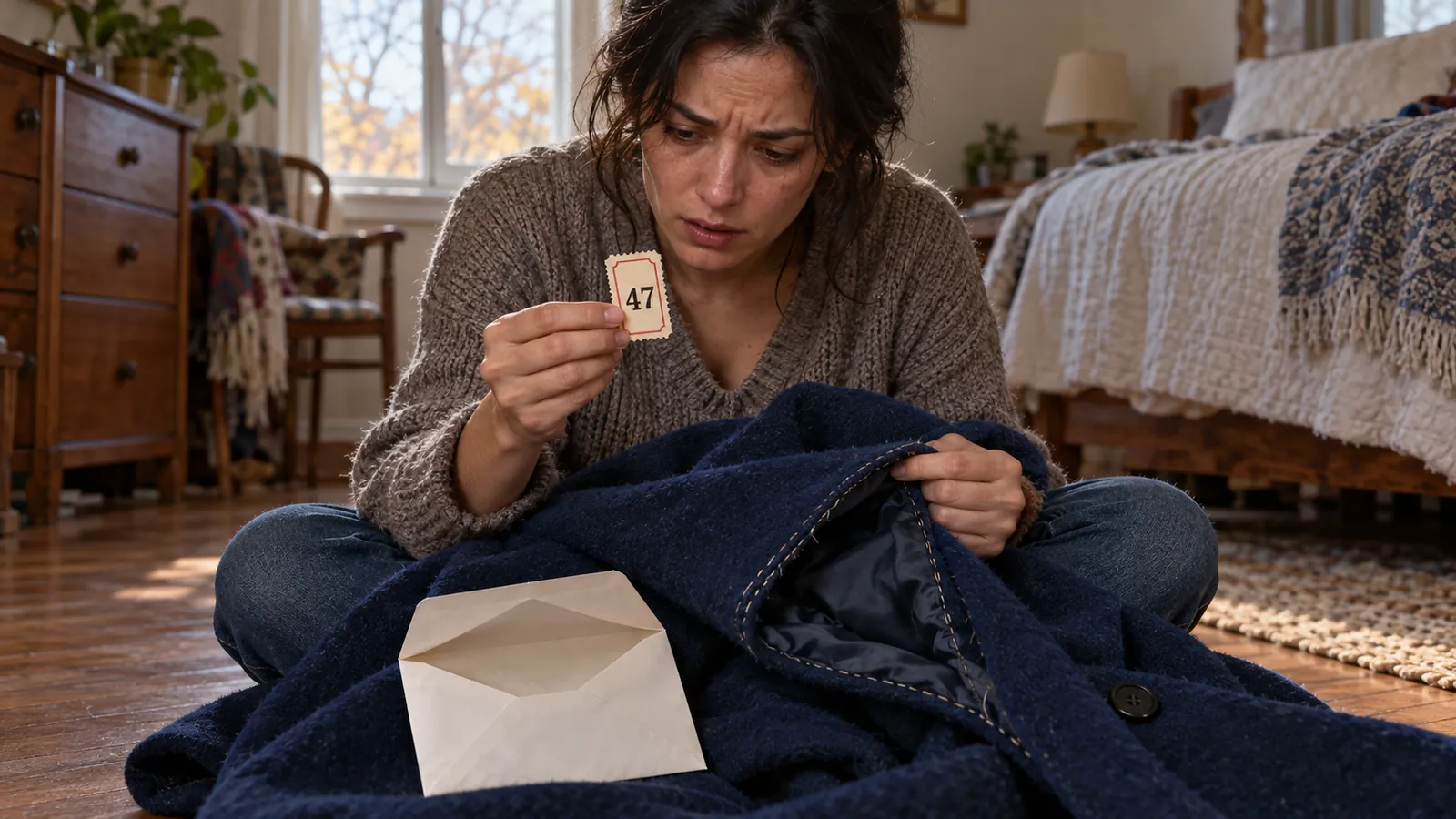
Then I opened the envelope.
Nora Jean,
If Imogen gave you this then I did not call her Monday, and I am sorry about that, because I had something in mind and it needed two weeks I did not have.
I want to tell you about your grandmother's notice. In February of 1994 I wrote it at this table and the Beacon cut four lines for length and never told me which ones. I bought a paper and read it and I could not tell what was missing. I only knew it was not what I wrote. So when it was my turn I wrote mine myself, and counted the lines, and paid for every one.
That is the part I am not ashamed of.
Here is the part I am. I have not known how to ask you for anything since the day you stood in that kitchen and told me to call Dale when the gutters went. You were tired and you did not mean it the way it has lived in me, and I took you at your word because that was easier than finding out. Your father would have picked up the telephone. He did it for both of us for thirty years, and then he died, and I found out I had never learned how.
So I bought eight days. It was a cheap trick and I knew it was and I did it anyway. I am seventy-four and I have a bad heart and I was out of ways to ask whether anybody would come and sit in this room, and I could not stand to ask it out loud and be told yes by people who were being kind to me.
You came. I need you to know I know that, because the paper is going to say something else and your brother is going to say something else at the service, and they will both be wrong, and I will not be there to say so.
You drove all night to a woman who had printed herself dead. Nobody made you. There was nothing left to be polite for.
That is the answer to the question I asked. It is not the answer I expected, and I have sat with that for four days, and I am not finished with it.
Leave the porch light on. I left it on for you for three years and I never once said why, and that was my whole trouble, Nora, in one sentence.
Mom
I went to see Dale on a Wednesday with a folder.
I put it on his kitchen table: the photocopy of slip 4411 with Esther's signature on the back, page three of the pre-need with family will place initialed in the margin, Curtis's note on the flap, Imogen's card reading simple, wants it done, and a copy of the letter. In order, the way I would hand a hospital its own file.
"What is this," he said.
"It's what happened. Read it in whatever order you want."
He read eleven minutes without sitting down. At Curtis's folder flap he put a hand over his mouth.
"She did it on purpose," he said.
"Yes."
"To see if I'd — " He stopped.
"Yes."
"Nora, I was going to go over that weekend. I had the dealership job and I was going to go Sunday, I swear to God — "
"I know." And I did know; that is the thing. "Dale, I'm not contesting the will. I talked to Imogen and I could file and I'm not going to. The house is yours. I'm not taking it, I'm not suing you, and I'm not doing you the favor of pretending I don't have this."
He looked at the folder like it was a summons. "Then what do you want?"
"Stop saying she never asked anybody for anything," I said. "She asked. She asked you for Thanksgiving and for her birthday, and she asked me by putting it in the newspaper. We're the ones who didn't answer."
He did not say anything. I let myself out and he was still standing at that table, and he has called me twice since, both times about nothing, and both times he called.
On the first Friday in April I went up the stairs above the pharmacy.
Esther Davenport got a slip out of the rack and uncapped the grease pencil and did not say one word about any of it.
Family-placed. Eleven lines, the seventh draft exactly as my mother wrote it, with the date corrected to the sixteenth of March. Under it, where the line had been blank in March, I wrote Arrangements by Riverbend Funeral Home, because that part was true now. Esther said the arrangements line rides free and always has.
I paid a hundred and eighty-six dollars in cash.
"Slip four four eight oh," Esther said, and wrote the number where I could see it. "It'll run Tuesday." She looked up. "You cross your sevens."
"I do."
Then I went to the utility office on Market and paid the electric on Lennox Street for one more month out of my own account. The woman at the window said that was unusual and did it anyway.
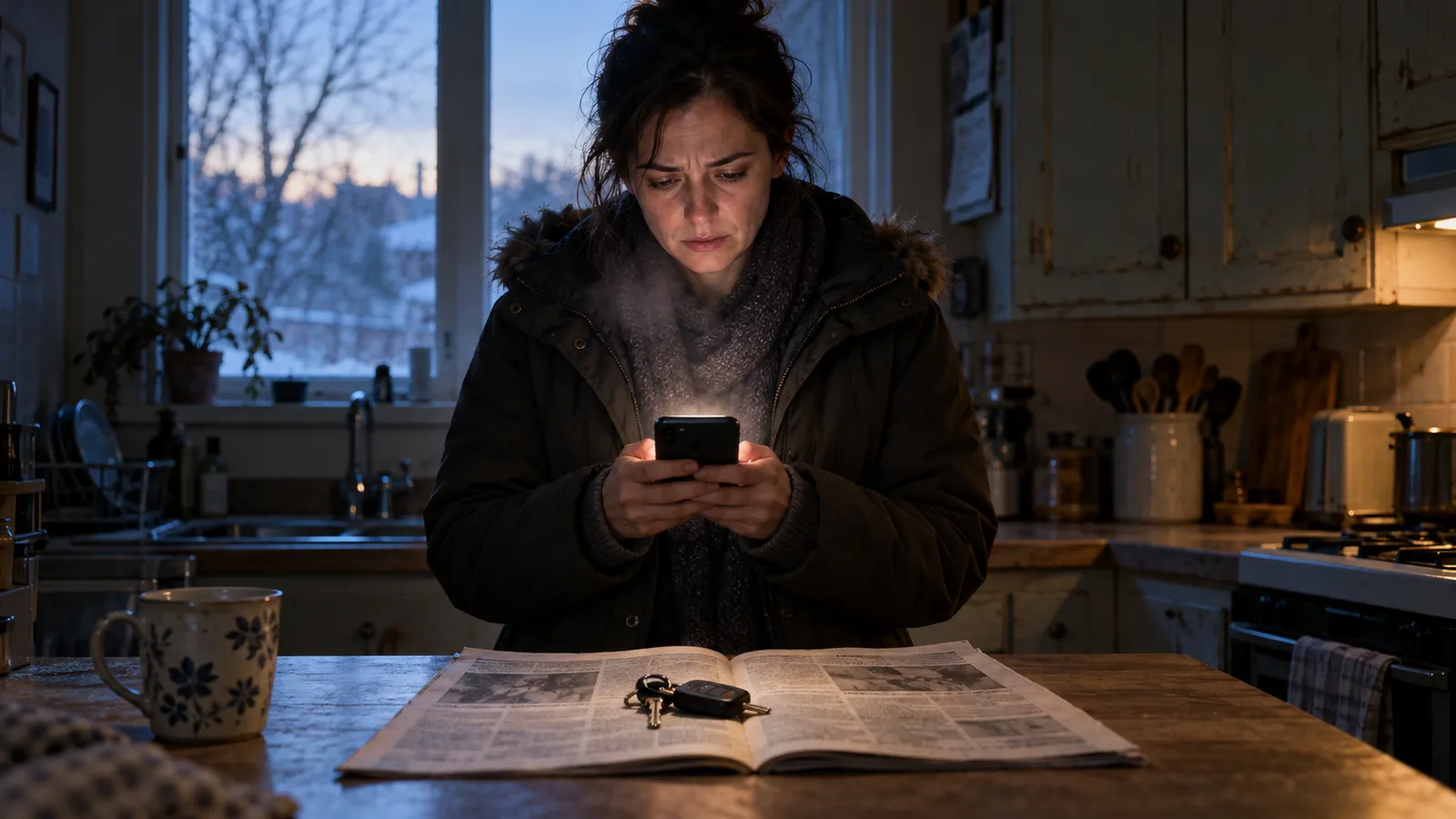
That night I stopped at the house with a four-pack of sixty-watt bulbs, because the old one had finally gone. I stood on the concrete step in the cold and screwed a new one in, and it came on while my hand was still on it. The switch inside had never once been turned off.
I sat in the car across the street a while with the letter in my coat and the heater going, looking at the lit porch of a house that was not mine anymore, in a town I had read twice a week for four years without once walking up the steps. The light stayed on behind me the whole way out to the state route.
The end