Family5 min read
My Father's Other Funeral
Three weeks after we buried my father, forty strangers held a second service for him—for a man they knew by another name. The Thursdays I resented my whole life turn out to have had an address, and a reason my mother spent thirty-one years refusing to say out loud.
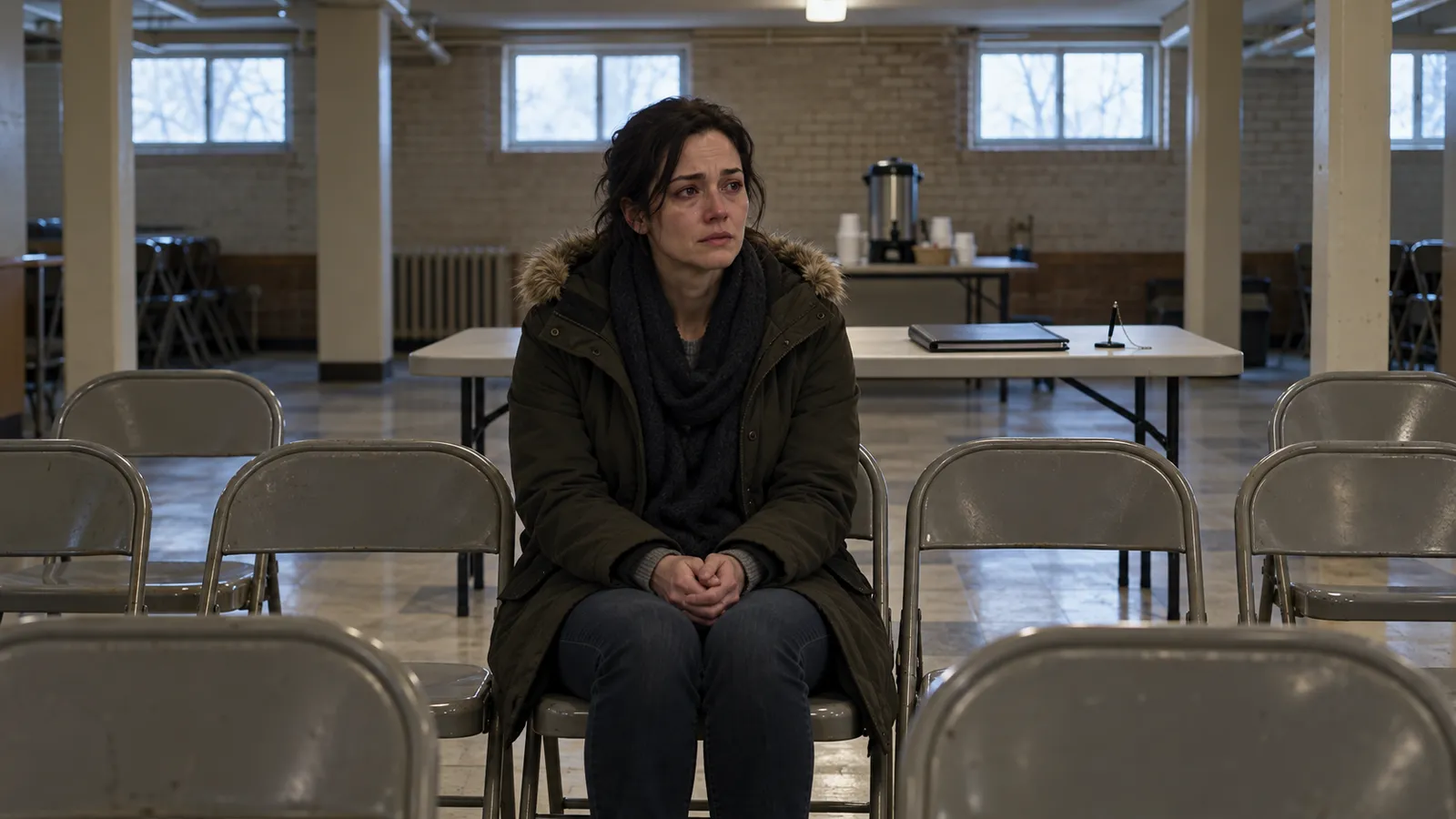
Chapter 9: Thursday
I sat in the gravel lot on Ninth Street for eleven minutes on the last Thursday in April with notebook 25 on the passenger seat and the engine off.
Six twenty is when he arrived. I know because it is written in a binder about a thousand times. I got there at six nine, which is a thing I did on purpose and am not proud of.
What I had decided, in the three weeks between my mother's kitchen and that parking lot, was this: I was not going to do it for him.
That is not a distinction that would hold up in a church. But I needed it, and I worked it out on night shifts counting pills into trays, and it comes down to the fact that if I did it for him then he would have gotten away with something. He would have set it up so that the daughter he lied to spent her Thursdays finishing his sentence. He did not get that. He does not get my Thursdays as a verdict in his favor.
There was a man named Dale on a list, who needed a ride at eight o'clock, and the man who used to drive him was dead.
That is a different kind of sentence. That one I could carry.
Mabel Prescott was in the hallway with the lanyard and the keys. She did not hug me. She did not say she had hoped I would come, or that he would have liked this, or any of the forty things I had braced for on the drive.
She said, "The urn needs descaling. There's vinegar under the sink."
"I'm not going to sponsor anybody," I said. "I want that said at the front. I'm not qualified, I'm not in recovery, I don't know what I'm doing in a room. I'm not him."
"Nobody asked you to be." Mabel handed me a clipboard. "There's two things here that don't require you to be anybody. Chairs, and the car."
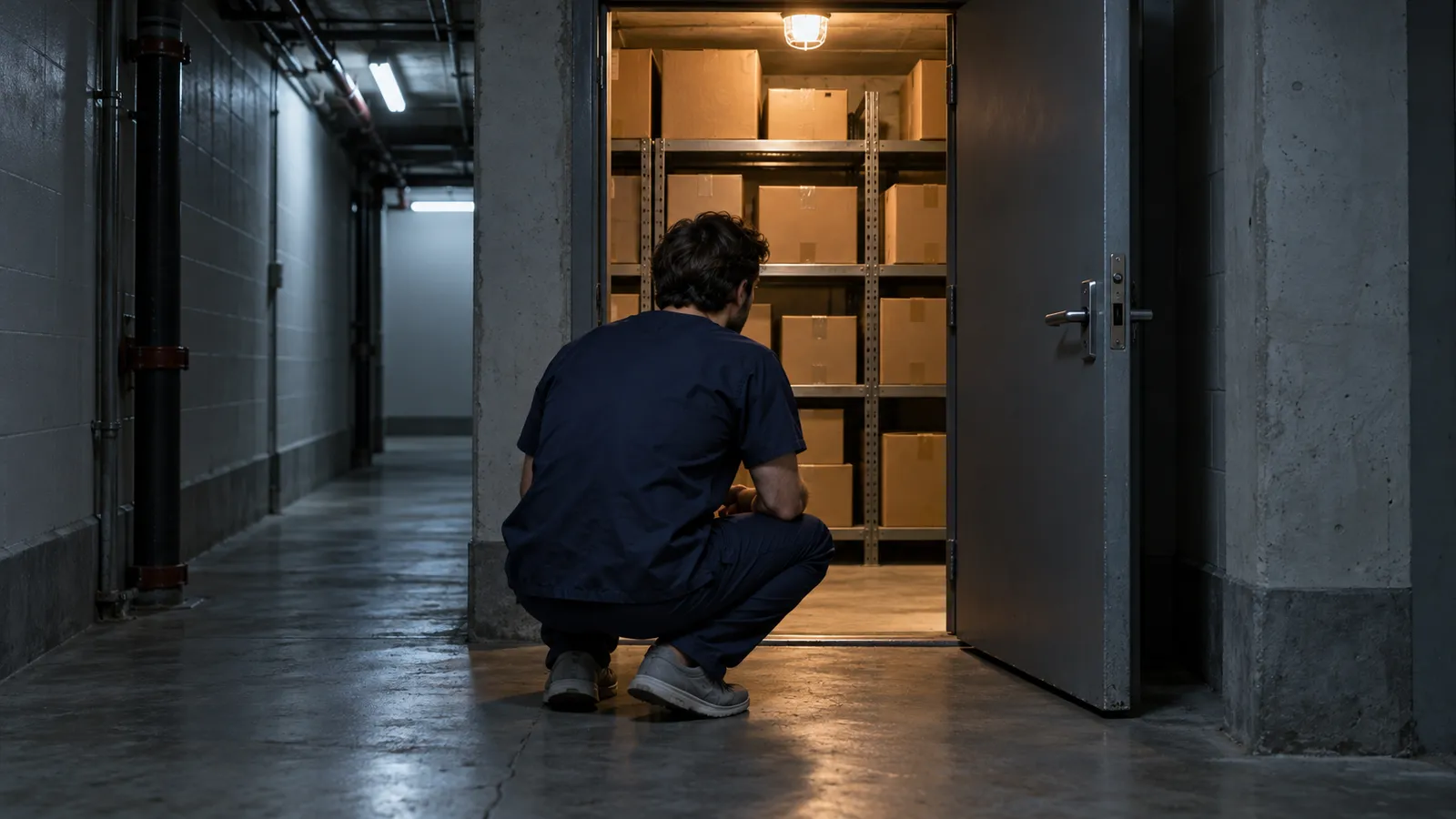
The chairs were in a rack behind the stage door, four hundred of them in batches, and I set out forty, four rows of ten, which was the number I had counted in that same room on the fourth of April without knowing I was counting my father's work.
Then I did the urn with the vinegar. It took twenty minutes and the gasket is four dollars and eighty cents and I knew that before anybody told me.
At seven the room filled up to about thirty. I did not go in. I stood in the hallway with the clipboard and the door open two inches and listened to a man I could not see say that he had eleven days, and the room made the low sound I had heard at the memorial and did not understand then.
Ezra came through at seven forty with his hands washed as well as they get.
He said, "There's coffee."
That was all he said. He did not mention my father once, that whole night, and he did it on purpose, and it was the single kindest thing anybody did for me in that month.
My phone went off at seven fifty.
"She told me," Sam said. He was outside somewhere; I could hear a road behind him. "Tuesday. She came over and sat in my kitchen and she said it with the word in it."
"Okay."
"Jules." His voice went. "Tell me it isn't true."
I had three weeks to get ready for that and I still had to put my hand on the door frame.
"It's true," I said. "The report says ten fifty-two and no test and a deer. The road out there is flat and open for a quarter mile. I walked it. He was drunk and I was in the back seat."
He was quiet long enough that I checked the screen.
"I've got notebook one on my table," he said.
"I know."
"The eleven's not a date."
"No."
"I've been telling people at work he was this guy who —" Sam stopped. "What do I do with it."
"You hold both of them," I said. "That's the whole job. He did that to me, and he drove a man named Terrence off Pratt Street in eleven-degree weather, and neither one of those pays for the other, and you don't get to put one down."
"That's not an answer."
"It's the only one there is. I've had it three weeks and it hasn't gotten any lighter."
"Are you at that place right now?"
"I'm about to go get a guy."
"Why," he said, and he was not being cruel, he genuinely wanted to know. "After all that. Why would you."
"Because he's on the list for eight o'clock," I said, "and the person who used to get him is dead."
At five of eight I signed the binder before I left, because that is the procedure, and the procedure is what the building runs on.
The card table by the stairs. The pen on the string. April's page, the grid ruled by hand and photocopied a thousand times.
The last entry in the name column, three lines up, from the Thursday before he died: Will F. Block capitals, pressed hard enough to emboss the page behind.
I wrote mine on the next open line.
Juliet F. Arrival 6:09. And in the ride column, because you fill it in when you get back, I left it blank.
The coin was in my coat pocket. The brass key was still on the ring with the house key and the truck key, and I have not taken it off, and I do not intend to.
Dale was outside a laundromat on Route 9 with a duffel bag between his feet and a cigarette he was not smoking. Fifty-some, windbreaker, hair wet like he had washed it in a sink. He looked at my car for a second too long before he got in, which I understood later: he had been watching for a different one.
The heat was already on. There was a coffee in the cupholder that I was not going to drink.
"You're not Will," he said.
"No."
He put the duffel on his knees and held it like a seatbelt. "He coming?"
"He died on the ninth of March." I pulled out onto Route 9. "I'm his daughter."
Dale looked straight ahead for about a mile.
"You new at this?" he said.
For thirty-one years the women in my family answered that kind of question with a deer and a sheet of ice, and I have decided I am not going to be the third one.
"Tonight's my first one," I said. "I'm Juliet. I'll get you there, and I'll come back Thursday, and I'm not going to ask you anything."
He nodded at the windshield. Then he turned his head and looked at the left side of my face in the dashboard light, the way the men in that basement had all learned not to.
"Where'd you get the chin?" he said.
"My father," I said. "I'll tell you on the way."
The end