Kindness5 min read
The Lunch Lady's Second Tray
Donna fed hungry kids a second tray and paid for it herself, logged as waste. The district fired her over $41. Then the three-strike rule hit the one child nobody could afford to name, and I had to decide what I was willing to lose.
Chapter 10: A Zero in the Column
The offer sat on Donna Fairchild's kitchen table for eleven days.
Reinstatement to her position, effective the first of December, at her prior rate with her seniority intact. A written reprimand for falsification of the daily production record to remain in her personnel file. No back pay for the twenty-four working days between the sixth of October and the first of December.
Twenty-four days at her rate is about two thousand one hundred dollars.
"They want me to sign that I did it," she said.
"You did do it."
"I know I did it, I told them I did it the first time they asked. I'm not signing a paper that says it so they can keep it in a drawer for when they want me."
That was the ninth of the eleven days. I was sitting at her table with my coat on and a cup of coffee going cold and I was there, if I am honest, to talk her into it, which she knew.
On the eleventh day she called me at a quarter to seven in the morning and said she had signed it, and when I asked what changed she told me, in this order: her husband's hearing aids are seven years old and the audiologist said five, and the Christmas insurance deductible resets in January, and she is sixty-three and there is no other kitchen in this county that is going to hire a cook with a termination on her record.
"That's it," she said. "That's the whole reason. Don't you go making it into something."
I have thought about that a great deal since. People around here have decided she came back for the kids. She came back for hearing aids. Both of those things can be true, and only one of them is the reason, and the one that is the reason is the one that ought to be in the paper.
My own written warning stays in my file until November of 2029. The plan of improvement closed out on the ninth of January, clean, signed by Mr. Abney on the bottom line and by Verna Stafford on the back.
She wrote one thing in the margin before she sent my copy over, in that handwriting of hers that runs uphill.
Documentation adequate. — V.S.
That is the warmest sentence I have ever received from that woman and I have it in a drawer.
The bridge account went live on the first of December, which was a Monday.
Here is what it looks like, since nobody ever says. A child comes down the line with a tray. He keys in his four digits. If his balance is under negative ten, the screen prints a thing it has never printed before.
CARRIED. SERVE.
And you hand him the tray. That is the entire difference between the two Novembers of my life. Four hundred and ten children came through that line on the first of December and nine of them got CARRIED and every one of the nine ate a hot lunch, and the only person in the building who knew it had happened was me, because that is what the screen is for.
Toby's balance cleared on the second of December. His father paid it at the counter in cash, two hundred dollars, the way he said he would, in three installments because the boat trailer money came in pieces. The office gave him a receipt each time.
He has never spoken to me again except to say good morning at the Memorial Day parade, and I would not want him to.
The boy does not know.
He knows there was a meeting and that his father stood up at it, because everybody in the fifth grade knows that. He does not know that the woman at register two sat in her car on Delphine Street on the twenty-second of October and read a lockbox like a bank statement, and he is not going to learn it from me, and that is the last thing in this account that I would call a kindness. It is also the only one that cost me nothing, which is probably how you can tell it is the real one.
Gerald Lockwood lost the Rotary breakfast in January; they gave the invocation slot to the fire chief and nobody said why. He kept his seat. The hearing in Zanesville got continued again, to March. He still parks at the far end of the lot.
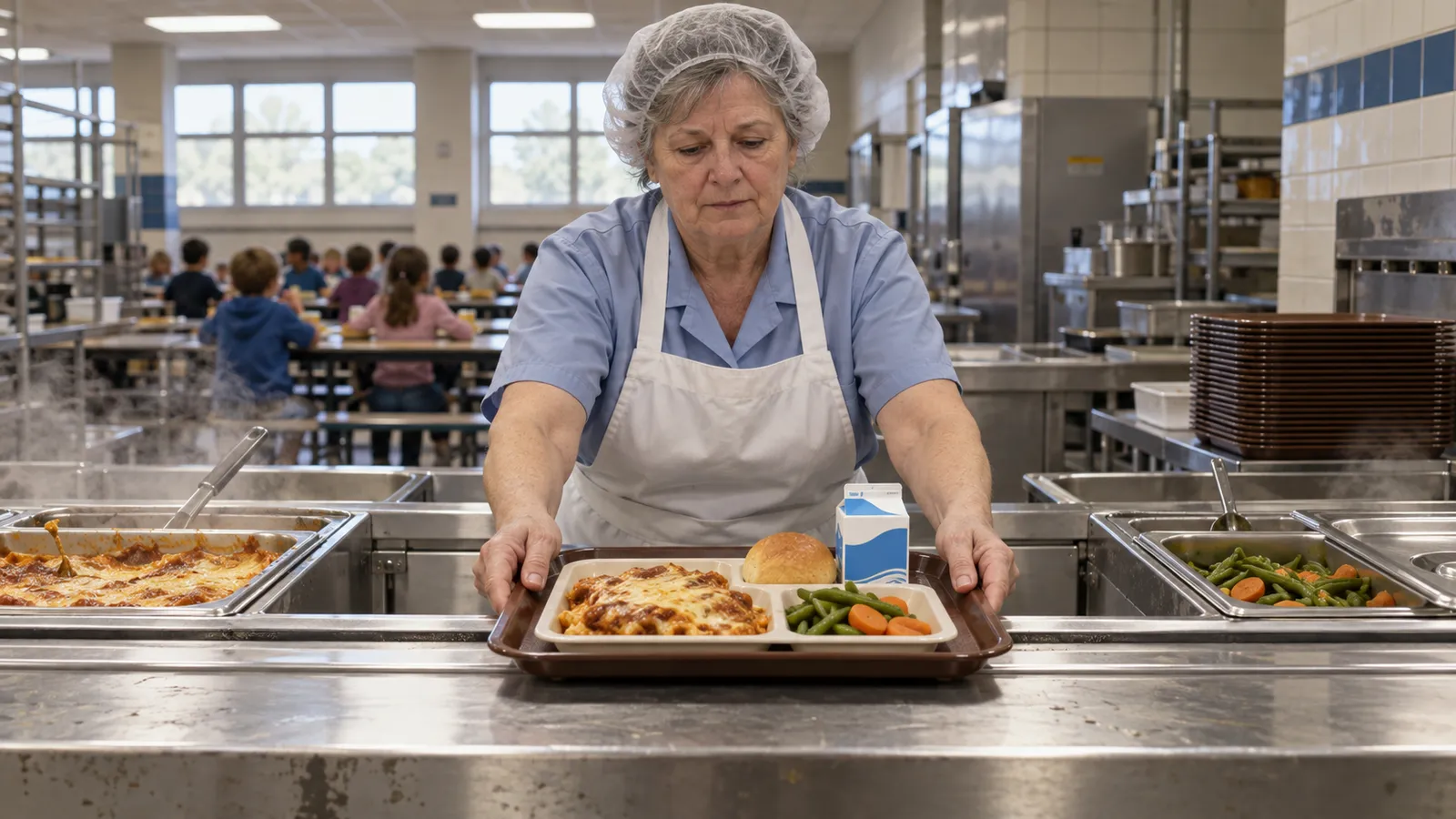
Donna came back on the first of December at five thirty in the morning, before anybody, the way she has come in for twenty-six years.
I got there at six and the ovens were already up and she had the production record off the clipboard and squared on the prep table, Monday's sheet, blank, with the date written in at the top in her hand.
"Four hundred and ten," she said. "Chicken and noodles. You want to do the beans or the fruit."
"The fruit."
That was the whole reunion. There is not going to be a better one.
At a quarter to one, after the last class had gone through and Rosa was breaking down the line, Donna sat on the milk crate by the slicer with the sheet on her knee and filled in the bottom of it.
Planned: 410. Served: 391. Alternate meals: 0.
Then the waste column, and she wrote a 0 in it, and she sat and looked at that zero for a second longer than a person needs to look at a zero.
Twenty of those boxes had a 1 in them. Those twenty ones are the reason she lost a job, and they are also the reason no auditor in Columbus and no administrator on Water Street and no father on Rowan Court could see what was happening in this room, and both of those sentences are hers to carry and she carries them.
She clipped the sheet back on the board. Then she took the two-inch pencil out of her apron pocket and put it back up on the shelf above the slicer, where it lives, with the flat place where her thumb goes facing out.
"Monday," she said.
On the wall behind her the price card is still laminated and still says it: Lunch $2.85. Adult $3.60. Extra milk $.40. Nobody has ever changed those numbers and I do not expect anybody will. Below it the dry-erase board had Tuesday's menu already on it in Rosa's handwriting, and through the pass-through you could see the long tables and the window at the end where a boy used to sit with a sandwich he did not open, and he was not sitting there, because he was out at recess with everybody else, having eaten.
The end